Powerful Similes for Being Mad Have you ever been so angry that words alone did not seem enough to describe your feelings? That is where similes can help. A good simile paints a picture in the reader’s mind and makes emotions feel more real.
Whether you are writing a story, poem, essay, or even a song, similes can make your descriptions more vivid and memorable. In this guide, you will discover powerful similes for being mad, their meanings, and practical examples that you can use in your own writing.
What Is a Simile?
A simile is a comparison between two different things using the words “like” or “as.”
It helps readers imagine feelings, actions, or situations more clearly. For example, saying someone was “as angry as a hornet” creates a stronger image than simply saying they were angry.
Full List of Similes for Being Mad
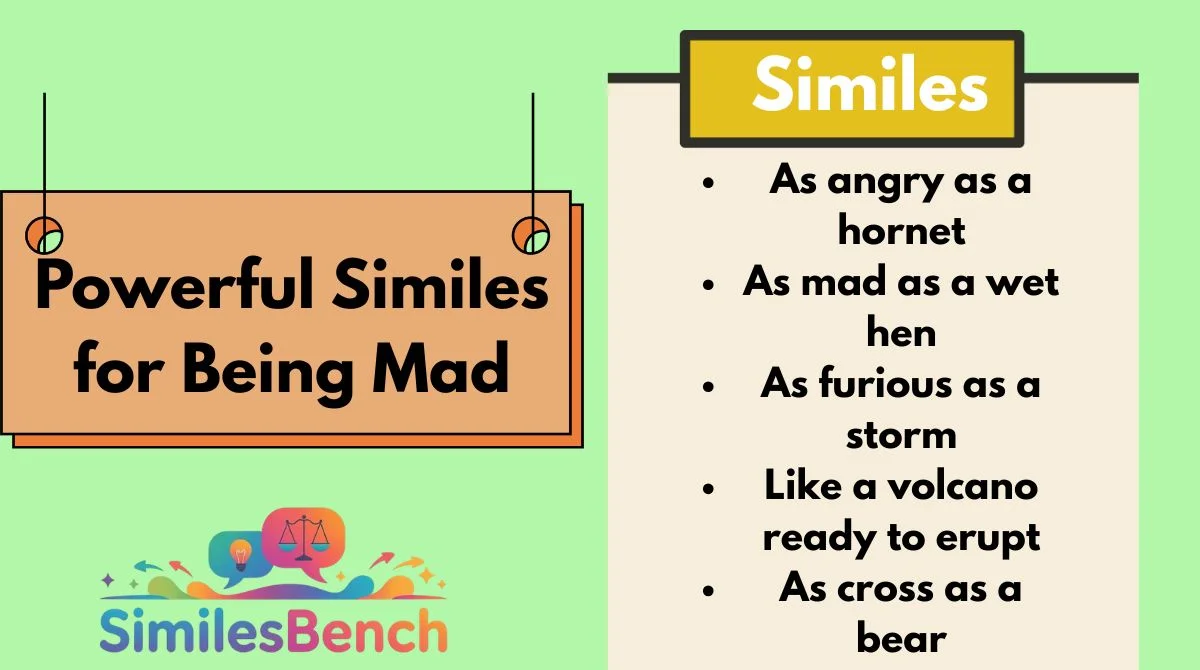
- As angry as a hornet
- As mad as a wet hen
- As furious as a storm
- Like a volcano ready to erupt
- As cross as a bear
- Like a bull seeing red
- As hot as fire
- Like thunder before rain
- As fierce as a tiger
- Like a kettle ready to boil over
- As wild as a trapped animal
- Like lightning striking a tree
1. As angry as a hornet
Meaning: Extremely angry.
Explanation: Hornets become aggressive when disturbed, so this simile shows intense anger.
Examples:
- Dad was as angry as a hornet when he found the broken window.
- She became as angry as a hornet after hearing the unfair accusation.
2. As mad as a wet hen
Meaning: Very upset or irritated.
Explanation: This old expression describes someone who is grumpy and annoyed.
Examples:
- My sister was as mad as a wet hen when her plans were canceled.
- He looked as mad as a wet hen after missing the last bus.
3. As furious as a storm
Meaning: Filled with powerful anger.
Explanation: Storms can be loud and destructive. Therefore, they make a strong comparison.
Examples:
- The coach was as furious as a storm after the team ignored instructions.
- She marched into the room, as furious as a storm.
4. Like a volcano ready to erupt
Meaning: About to explode with anger.
Explanation: A volcano builds pressure before suddenly erupting.
Examples:
- He stood silently, like a volcano ready to erupt.
- The manager looked like a volcano ready to erupt during the meeting.
5. As cross as a bear
Meaning: Bad-tempered and angry.
Explanation: Bears can become dangerous when bothered.
Examples:
- Grandpa was as cross as a bear when someone woke him early.
- She sounded as cross as a bear on the phone.
6. Like a bull seeing red
Meaning: Instantly angry.
Explanation: Although the idea comes from a common belief about bulls, it is often used to describe sudden rage.
Examples:
- He was like a bull seeing red when he heard the insult.
- Sarah reacted like a bull seeing red after the rude comment.
7. As hot as fire
Meaning: Burning with anger.
Explanation: Fire represents heat, intensity, and strong emotions.
Examples:
- His face was as hot as fire after the argument.
- She felt as hot as fire when blamed for something she did not do.
8. Like thunder before rain
Meaning: Showing signs of coming anger.
Explanation: Thunder often warns that a storm is near.
Examples:
- His voice sounded like thunder before rain.
- The classroom became quiet because the teacher looked like thunder before rain.
9. As fierce as a tiger
Meaning: Extremely angry and intimidating.
Explanation: Tigers are known for their strength and power.
Examples:
- The mother was as fierce as a tiger protecting her child.
- He became as fierce as a tiger during the heated debate.
10. Like a kettle ready to boil over
Meaning: Nearly losing control of anger.
Explanation: A boiling kettle builds pressure until it spills over.
Examples:
- She seemed like a kettle ready to boil over all afternoon.
- After hours of frustration, he was like a kettle ready to boil over.
11. As wild as a trapped animal
Meaning: Angry because of stress or frustration.
Explanation: Trapped animals often react aggressively.
Examples:
- He became as wild as a trapped animal when cornered.
- The crowd grew as wild as a trapped animal after the delay.
12. Like lightning striking a tree
Meaning: Sudden and powerful anger.
Explanation: Lightning strikes quickly and forcefully.
Examples:
- Her anger hit like lightning striking a tree.
- The news affected him like lightning striking a tree.
Creative Writing Tips
Powerful Similes for Being Mad can make ordinary writing much more interesting. However, using them well takes practice.
Using Similes in Stories
Show emotions instead of simply naming them.
Instead of writing, “Tom was angry,” write, “Tom was like a volcano ready to erupt.” As a result, readers can picture his feelings more clearly.
Using Similes in Poems
Poetry often relies on strong images.
Therefore, choose similes that create emotion and rhythm. A vivid comparison can make a poem more memorable.
Using Similes in Essays
Essays should stay clear and easy to understand.
However, one or two well-placed similes can make examples more engaging and relatable.
Using Similes in Songs
Songwriters use similes to express feelings creatively.
For instance, comparing anger to thunder, fire, or storms can make lyrics more powerful and emotional.
Practical Tips for Better Similes
- Choose comparisons readers can easily imagine.
- Match the simile to the mood of your writing.
- Avoid using too many similes in one paragraph.
- Read your sentence aloud to check if it sounds natural.
- Furthermore, try creating your own original comparisons.
FAQs
What are similes for being mad?
Similes for being mad are comparisons that describe anger using the words “like” or “as.” They help readers picture emotions more clearly.
Why do writers use similes?
Writers use similes because they make descriptions stronger, more vivid, and easier to imagine.
Can students use similes in school essays?
Yes. Similes can improve essays when used naturally and appropriately.
What is the difference between a simile and a metaphor?
A simile uses “like” or “as” to compare things. A metaphor makes a direct comparison without those words.
How can I create my own similes?
Think about the feeling you want to describe. Then compare it to something that shares the same quality or behavior.
Conclusion
Powerful Similes for Being Mad are a simple yet powerful way to bring emotions to life. They help readers see, feel, and understand anger more clearly. Whether you are writing stories, poems, essays, or songs, these similes can make your words stronger and more memorable. Start using them in your writing today, and you will quickly notice how much more vivid and engaging your descriptions become.