Similes for Being Scared Fear is one of the strongest emotions people experience. Sometimes, however, simply saying “I was scared” does not fully express how someone feels. That is where similes become useful.
Similes help us compare one thing to another using words like as or like. As a result, our writing becomes more vivid, emotional, and interesting. Whether you are writing a story, poem, essay, or song, these similes for being scared can help bring your words to life.
What Is a Simile?
A simile is a figure of speech that compares two different things using the words like or as.
For example, instead of saying someone is very fast, you can say, “He runs as fast as a cheetah.”
Similes make descriptions clearer, stronger, and more memorable.
Full List of Similes for Being Scared
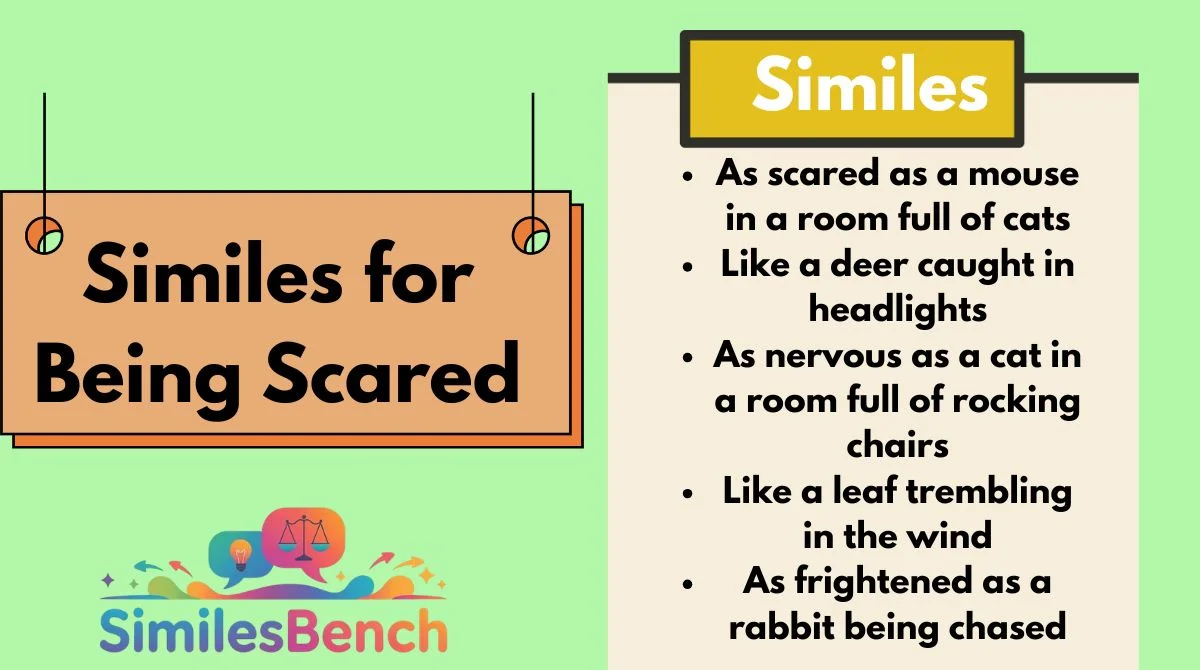
- As scared as a mouse in a room full of cats
- Like a deer caught in headlights
- As nervous as a cat in a room full of rocking chairs
- Like a leaf trembling in the wind
- As frightened as a rabbit being chased
- Like a bird trapped in a cage
- As pale as a ghost
- Like a child lost in a crowd
- As shaky as jelly
- Like someone walking through a haunted house
- As jumpy as a frog near a snake
- Like a sailor in a storm
1. As scared as a mouse in a room full of cats
Meaning: Extremely frightened.
Explanation: A mouse surrounded by cats has every reason to be afraid.
Examples:
- When the principal called her name, she looked as scared as a mouse in a room full of cats.
- He stood at the interview door, as scared as a mouse in a room full of cats.
2. Like a deer caught in headlights
Meaning: Frozen with fear or surprise.
Explanation: Deer often stop moving when bright lights shine on them.
Examples:
- She looked like a deer caught in headlights when the teacher asked a difficult question.
- Suddenly, he stood like a deer caught in headlights after hearing the loud crash.
3. As nervous as a cat in a room full of rocking chairs
Meaning: Very anxious and uneasy.
Explanation: A cat would feel unsafe around moving rocking chairs.
Examples:
- Before the competition, I was as nervous as a cat in a room full of rocking chairs.
- He felt as nervous as a cat in a room full of rocking chairs while waiting for the results.
4. Like a leaf trembling in the wind
Meaning: Shaking because of fear.
Explanation: Leaves shake easily, especially during strong winds.
Examples:
- Her hands were like a leaf trembling in the wind before her speech.
- The boy stood like a leaf trembling in the wind outside the doctor’s office.
5. As frightened as a rabbit being chased
Meaning: Terrified and desperate to escape.
Explanation: Rabbits become extremely scared when predators chase them.
Examples:
- She ran across the yard as frightened as a rabbit being chased.
- The child looked as frightened as a rabbit being chased during the thunderstorm.
6. Like a bird trapped in a cage
Meaning: Scared and unable to escape.
Explanation: A trapped bird often becomes restless and fearful.
Examples:
- He felt like a bird trapped in a cage while waiting for the verdict.
- During the emergency, everyone seemed like a bird trapped in a cage.
7. As pale as a ghost
Meaning: So frightened that all color leaves the face.
Explanation: Fear can make someone appear unusually pale.
Examples:
- After hearing the strange noise, she turned as pale as a ghost.
- He was as pale as a ghost when the lights suddenly went out.
8. Like a child lost in a crowd
Meaning: Scared, confused, and helpless.
Explanation: Being lost can make anyone feel frightened.
Examples:
- On her first day at college, she felt like a child lost in a crowd.
- He wandered through the airport like a child lost in a crowd.
9. As shaky as jelly
Meaning: Trembling because of fear.
Explanation: Jelly wobbles and shakes with even small movements.
Examples:
- My legs were as shaky as jelly before stepping onto the stage.
- He felt as shaky as jelly after hearing the unexpected news.
10. Like someone walking through a haunted house
Meaning: Feeling tense and fearful.
Explanation: Haunted houses are often linked with fear and suspense.
Examples:
- She moved through the dark hallway like someone walking through a haunted house.
- He opened the old door like someone walking through a haunted house.
11. As jumpy as a frog near a snake
Meaning: Easily startled because of fear.
Explanation: A frog near danger remains alert at all times.
Examples:
- After the accident, he became as jumpy as a frog near a snake.
- She was as jumpy as a frog near a snake during the storm.
12. Like a sailor in a storm
Meaning: Feeling frightened and uncertain.
Explanation: Storms at sea can be dangerous and unpredictable.
Examples:
- During the crisis, he felt like a sailor in a storm.
- She looked like a sailor in a storm while facing the difficult decision.
Creative Writing Tips
Similes can transform ordinary writing into something readers remember. Therefore, learning how to use them effectively is important.
In Stories
Use similes to show emotions instead of simply naming them.
For instance, rather than writing “She was scared,” write “She was as pale as a ghost.” This creates a stronger image in the reader’s mind.
In Poems
Poetry often relies on vivid imagery. Consequently, similes can make feelings and scenes more powerful.
Try comparing fear to animals, weather, or everyday objects to create unique effects.
In Essays
Although essays are usually formal, creative similes can make descriptive writing more engaging.
However, use them carefully and only when they improve clarity.
In Songs
Songwriters frequently use similes because they create emotional connections.
For example, comparing fear to a trembling leaf can help listeners picture the feeling instantly.
Helpful Tips
- Choose comparisons readers can easily imagine.
- Keep similes simple and natural.
- Avoid using too many in one paragraph.
- Match the simile to the mood of your writing.
- Furthermore, try creating your own original comparisons.
FAQs
What are similes for being scared?
Similes for being scared are comparisons that help describe fear more vividly using words such as like or as.
Why should writers use similes?
Similes make writing more descriptive and emotional. As a result, readers can better imagine what is happening.
Can students use similes in school essays?
Yes. When used correctly, similes can improve descriptive essays and creative assignments.
What is the difference between a simile and a metaphor?
A simile uses words like as or like. A metaphor makes a direct comparison without using those words.
How can I create my own similes?
Think about the feeling you want to describe. Then compare it to something that shares similar qualities or emotions.
Conclusion
Similes for Being Scared are a simple yet powerful way to describe fear. Instead of using ordinary words, they help readers see and feel emotions more clearly. Whether you are writing stories, poems, essays, or songs, these examples can make your work more engaging. Start practicing today, and soon your writing will become more vivid, creative, and memorable.