Similes for Emotions are a big part of our daily lives. We feel happiness, sadness, fear, excitement, and many other feelings every day. However, it can sometimes be difficult to explain these emotions in a way that feels vivid and interesting.
That is where similes can help. A simile compares one thing to another using words like “as” or “like.” As a result, readers can picture feelings more clearly and connect with your writing on a deeper level.
Whether you are a student, a creative writer, or simply someone who loves language, learning emotional similes can make your writing stronger and more engaging. Let’s explore some powerful examples that bring emotions to life.
What Is a Simile?
A simile is a figure of speech that compares two different things using the words “like” or “as.”
It helps readers create a clear picture in their minds. Therefore, emotions become easier to understand and more interesting to read about.
Full List of Similes for Emotions
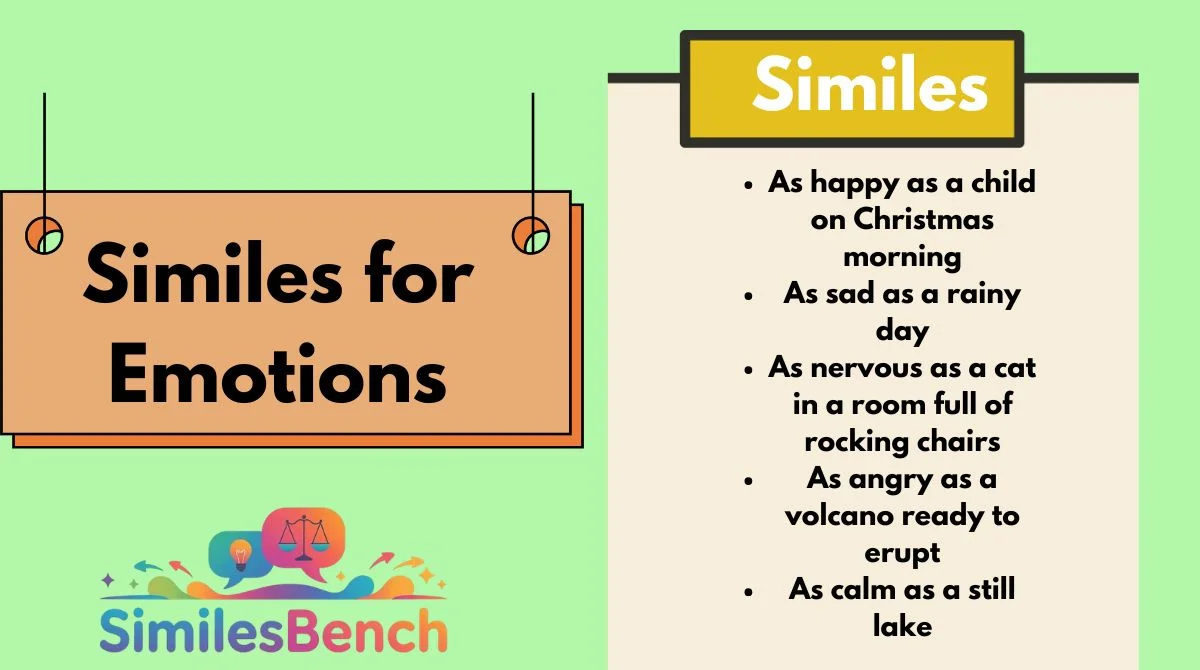
- As happy as a child on Christmas morning
- As sad as a rainy day
- As nervous as a cat in a room full of rocking chairs
- As angry as a volcano ready to erupt
- As calm as a still lake
- As excited as a kid in a candy store
- As frightened as a rabbit in headlights
- As proud as a peacock
- As lonely as an island in the sea
- As worried as a person waiting for important news
- As cheerful as sunshine
- As heartbroken as shattered glass
1. As happy as a child on Christmas morning
Meaning: Extremely happy and joyful.
Explanation: This simile describes pure excitement and delight.
Examples:
- Maya was as happy as a child on Christmas morning when she won the art contest.
- After hearing the good news, he looked as happy as a child on Christmas morning.
2. As sad as a rainy day
Meaning: Deeply sad or gloomy.
Explanation: Rainy weather is often linked with feelings of sadness.
Examples:
- She felt as sad as a rainy day after her best friend moved away.
- The old photo made him as sad as a rainy day.
3. As nervous as a cat in a room full of rocking chairs
Meaning: Very anxious or worried.
Explanation: The image creates a strong sense of danger and uncertainty.
Examples:
- Before her speech, she was as nervous as a cat in a room full of rocking chairs.
- He felt as nervous as a cat in a room full of rocking chairs during the interview.
4. As angry as a volcano ready to erupt
Meaning: Extremely angry.
Explanation: A volcano suggests powerful emotions building up inside.
Examples:
- Dad was as angry as a volcano ready to erupt after seeing the broken window.
- She became as angry as a volcano ready to erupt when she heard the unfair decision.
5. As calm as a still lake
Meaning: Very peaceful and relaxed.
Explanation: A still lake creates a picture of complete quietness.
Examples:
- Even during the storm, he remained as calm as a still lake.
- Her voice was as calm as a still lake during the discussion.
6. As excited as a kid in a candy store
Meaning: Full of excitement and enthusiasm.
Explanation: Children often show great excitement when surrounded by treats.
Examples:
- The travelers were as excited as kids in a candy store before the adventure began.
- She looked as excited as a kid in a candy store while opening her gifts.
7. As frightened as a rabbit in headlights
Meaning: Very scared or shocked.
Explanation: Rabbits often freeze when caught in bright lights.
Examples:
- He stood as frightened as a rabbit in headlights when the dog barked.
- The sudden noise left her as frightened as a rabbit in headlights.
8. As proud as a peacock
Meaning: Feeling great pride or confidence.
Explanation: Peacocks are known for displaying their beautiful feathers.
Examples:
- The young athlete walked away as proud as a peacock after winning the race.
- Her parents were as proud as peacocks on graduation day.
9. As lonely as an island in the sea
Meaning: Feeling isolated and alone.
Explanation: An island surrounded by water suggests separation from others.
Examples:
- Moving to a new city made him feel as lonely as an island in the sea.
- She sat quietly, feeling as lonely as an island in the sea.
10. As worried as a person waiting for important news
Meaning: Extremely concerned or anxious.
Explanation: Waiting often creates feelings of uncertainty.
Examples:
- The family was as worried as a person waiting for important news.
- Before the results arrived, she felt as worried as a person waiting for important news.
11. As cheerful as sunshine
Meaning: Bright, positive, and happy.
Explanation: Sunshine is often connected with warmth and happiness.
Examples:
- His smile was as cheerful as sunshine.
- Despite the challenges, she stayed as cheerful as sunshine.
12. As heartbroken as shattered glass
Meaning: Deeply hurt emotionally.
Explanation: Shattered glass represents something broken beyond repair.
Examples:
- She felt as heartbroken as shattered glass after saying goodbye.
- He looked as heartbroken as shattered glass when the team lost.
Creative Writing Tips
Similes can make writing more colorful and memorable. However, using them wisely is important.
In Stories
Show emotions instead of simply naming them.
For example, instead of writing “She was scared,” write “She was as frightened as a rabbit in headlights.” As a result, readers can imagine the feeling more clearly.
In Poems
Similes add beauty and rhythm.
Furthermore, they help readers connect with emotions through vivid images and comparisons.
In Essays
Use similes carefully to explain ideas.
For instance, a simile can make a personal narrative more interesting without sounding overly dramatic.
In Songs
Many songwriters use similes to create emotional impact.
Therefore, try comparing feelings to objects, weather, animals, or everyday experiences.
Practical Tips
- Choose comparisons that readers understand easily.
- Use similes to support important emotions.
- Avoid adding too many in one paragraph.
- Read your sentences aloud to check their flow.
- Experiment with original comparisons in creative writing.
FAQs
What are similes for emotions?
Similes for emotions compare feelings to something familiar using “like” or “as.” They help readers understand emotions more clearly.
Why are similes important in writing?
They make writing more vivid and engaging. As a result, readers can picture emotions more easily.
Can students use similes in essays?
Yes. However, they should be used naturally and only when they improve clarity or expression.
What is the difference between a simile and a metaphor?
A simile uses words such as “like” or “as.” A metaphor makes a direct comparison without using those words.
How can I create my own emotional similes?
Think about the emotion first. Then compare it to something that shares similar qualities or feelings.
Conclusion
Similes are simple tools, yet they can transform ordinary writing into something memorable. They help readers see, feel, and understand emotions more clearly. Furthermore, they add creativity to stories, poems, essays, and songs. By learning and practicing these emotional similes, you can make your writing richer and more expressive. So, start using them today and watch your words come alive.