Similes for Proud Have you ever felt so happy about an achievement that you wanted everyone to know about it? That feeling is often called pride. Writers often use similes to describe proud feelings in a more colorful and memorable way.
A good simile can help readers picture an emotion instantly. Whether you are writing a story, poem, essay, or song, these similes for proud can make your writing more expressive and engaging.
What Is a Simile?
A simile is a comparison between two different things using the words “like” or “as.”
It helps readers understand feelings, actions, and descriptions by connecting them to something familiar.
Full List of Similes for Proud
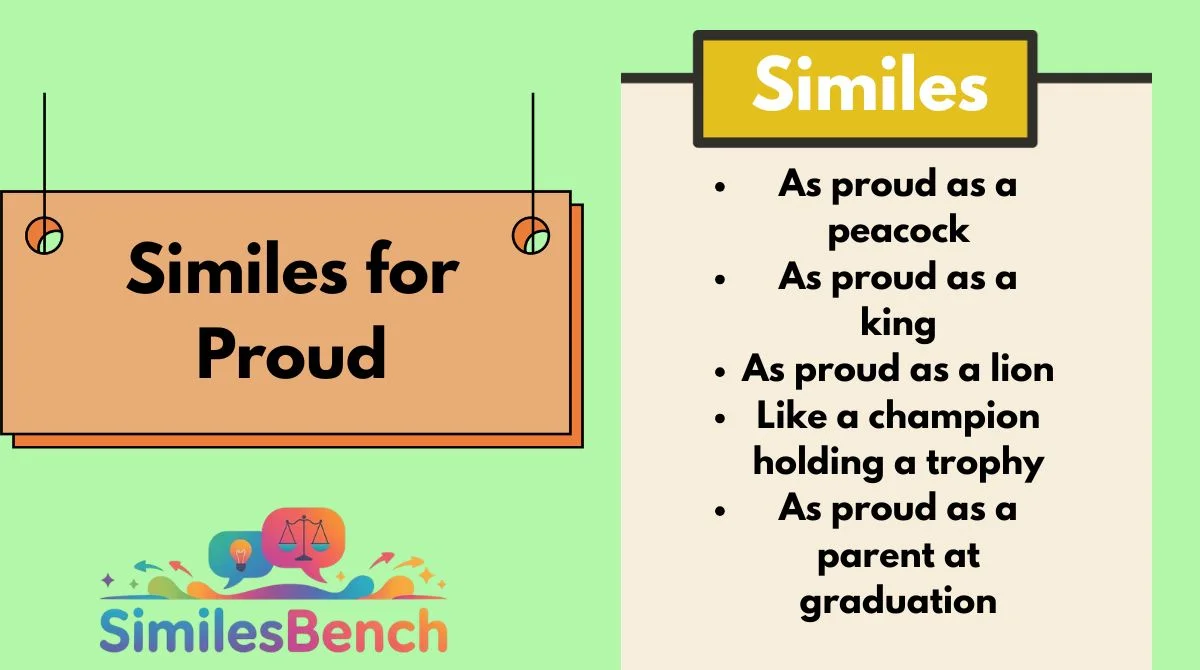
- As proud as a peacock
- As proud as a king
- As proud as a lion
- Like a champion holding a trophy
- As proud as a parent at graduation
- Like a soldier receiving a medal
- As proud as an eagle soaring high
- Like an artist admiring a masterpiece
- As proud as a captain leading a team
- Like a gardener seeing flowers bloom
- As proud as a student with perfect grades
- Like a baker showing off a fresh cake
- As proud as a winner crossing the finish line
1. As proud as a peacock
Meaning: Extremely proud and confident.
Explanation: Peacocks are known for showing off their beautiful feathers.
Examples:
- Sarah walked onto the stage as proud as a peacock after winning the spelling bee.
- He smiled as proud as a peacock when his artwork was displayed in the school hall.
2. As proud as a king
Meaning: Feeling important and satisfied.
Explanation: Kings are often seen as powerful and respected.
Examples:
- Jake stood as proud as a king after completing the difficult project.
- She felt as proud as a king when her hard work finally paid off.
3. As proud as a lion
Meaning: Strong, confident, and fearless.
Explanation: Lions are symbols of courage and strength.
Examples:
- The young athlete looked as proud as a lion after the big game.
- He walked into the room as proud as a lion after hearing the good news.
4. Like a champion holding a trophy
Meaning: Feeling successful and honored.
Explanation: Champions often feel great pride after victory.
Examples:
- Emma smiled like a champion holding a trophy when she received her award.
- He stood like a champion holding a trophy after months of practice.
5. As proud as a parent at graduation
Meaning: Deeply happy about someone’s achievement.
Explanation: Parents often feel emotional pride during graduation ceremonies.
Examples:
- Her grandmother looked as proud as a parent at graduation during the performance.
- The coach was as proud as a parent at graduation after the team’s success.
6. Like a soldier receiving a medal
Meaning: Honored and respected.
Explanation: Receiving a medal is often a moment of great pride.
Examples:
- He stood tall like a soldier receiving a medal when his name was announced.
- Maya felt like a soldier receiving a medal after being recognized for her efforts.
7. As proud as an eagle soaring high
Meaning: Confident and full of self-belief.
Explanation: Eagles flying high often symbolize freedom and achievement.
Examples:
- She felt as proud as an eagle soaring high after passing her exams.
- The young inventor looked as proud as an eagle soaring high during the science fair.
8. Like an artist admiring a masterpiece
Meaning: Feeling pleased with something you created.
Explanation: Artists often take pride in their best work.
Examples:
- He smiled like an artist admiring a masterpiece after finishing the mural.
- She stared at her project like an artist admiring a masterpiece.
9. As proud as a captain leading a team
Meaning: Proud of leadership and responsibility.
Explanation: Team captains often feel proud when guiding others.
Examples:
- Liam looked as proud as a captain leading a team during the competition.
- She felt as proud as a captain leading a team after helping everyone succeed.
10. Like a gardener seeing flowers bloom
Meaning: Proud of hard work and patience.
Explanation: Gardeners enjoy seeing the results of their efforts.
Examples:
- The teacher smiled like a gardener seeing flowers bloom as her students improved.
- He felt like a gardener seeing flowers bloom when the project finally succeeded.
11. As proud as a student with perfect grades
Meaning: Very pleased with an achievement.
Explanation: Good results often create a strong sense of pride.
Examples:
- She was as proud as a student with perfect grades after receiving the certificate.
- He looked as proud as a student with perfect grades when the results arrived.
12. Like a baker showing off a fresh cake
Meaning: Happy to display something well done.
Explanation: Bakers often take pride in their creations.
Examples:
- Maria smiled like a baker showing off a fresh cake after decorating the hall.
- He presented his model like a baker showing off a fresh cake.
13. As proud as a winner crossing the finish line
Meaning: Proud after overcoming challenges.
Explanation: Finishing a race successfully brings joy and pride.
Examples:
- She looked as proud as a winner crossing the finish line after months of study.
- The young musician felt as proud as a winner crossing the finish line after the concert.
Creative Writing Tips
Similes can make ordinary writing feel alive. However, they work best when they fit naturally into the situation.
Using Similes in Stories
Stories become more vivid when characters show emotions through comparisons.
For instance, instead of saying a character was proud, write, “He stood as proud as a lion.” As a result, readers can picture the feeling more clearly.
Using Similes in Poems
Poetry often relies on strong imagery.
Therefore, similes can help create memorable pictures in the reader’s mind. Choose comparisons that match the mood of the poem.
Using Similes in Essays
Essays should be clear and interesting.
Although formal essays do not need many similes, a well-placed comparison can make an idea easier to understand.
Using Similes in Songs
Songwriters often use similes because they create emotion quickly.
Furthermore, simple comparisons are easier for listeners to remember. Try connecting feelings to everyday experiences.
Practical Tips
- Keep your similes simple and clear.
- Make sure the comparison makes sense.
- Avoid using too many in one paragraph.
- Read your sentence aloud to check its flow.
- Create original similes when possible.
- Match the simile to the emotion you want to express.
FAQs
What is the most common simile for proud?
The most common simile is “as proud as a peacock.” It is widely used because peacocks are famous for displaying their colorful feathers.
Why do writers use similes?
Writers use similes to create vivid images and make descriptions easier to understand. As a result, readers connect more strongly with the text.
Can similes be used in school essays?
Yes. However, they should be used carefully. A few well-chosen similes can make writing more interesting without sounding informal.
What is the difference between a simile and a metaphor?
A simile uses the words “like” or “as” to compare things. A metaphor makes a direct comparison without using those words.
How can students create their own similes?
Students can think about an emotion or action first. Then, they can compare it to something familiar that shares the same quality.
Conclusion
Similes are powerful tools that help writers describe emotions in a creative and memorable way. These similes for proud can add color, personality, and feeling to stories, poems, essays, and songs.
Moreover, they help readers connect with characters and ideas more easily. Practice using these comparisons in your writing, and soon your words will become more vivid, engaging, and enjoyable to read.