Freedom is one of the most powerful feelings a person can experience. It can feel exciting, peaceful, joyful, or even life-changing. Because freedom is such a strong emotion, writers often use similes to describe it in a more vivid and memorable way.
A simile compares two different things using words like “as” or “like.” As a result, readers can easily imagine a feeling, idea, or experience. In this article, you’ll discover creative similes for freedom, learn what they mean, and see how to use them naturally in your writing.
What Is a Simile?
A simile is a figure of speech that compares two different things using the words “like” or “as.”
For example, saying “free as a bird” helps readers picture the feeling of freedom more clearly. Therefore, similes make writing more colorful, emotional, and engaging.
Full List of Similes for Freedom
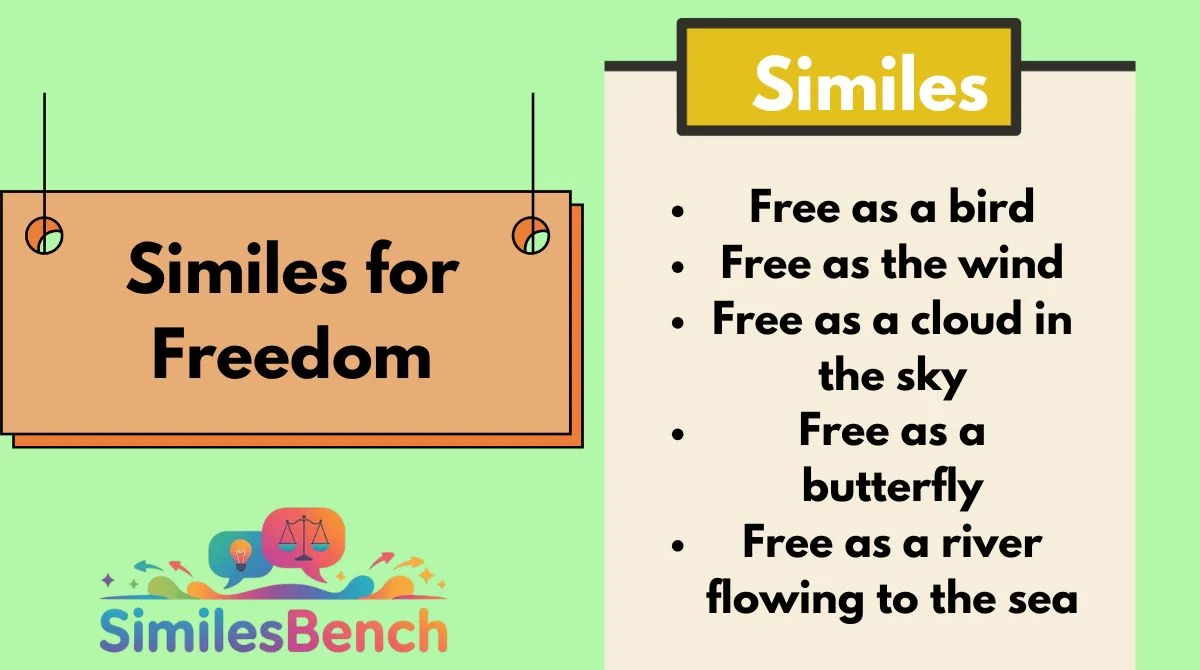
- Free as a bird
- Free as the wind
- Free as a cloud in the sky
- Free as a butterfly
- Free as a river flowing to the sea
- Free as a horse running across a field
- Free as a kite in the breeze
- Free as sunlight across the earth
- Free as an eagle soaring above mountains
- Free as a leaf drifting in the air
- Free as the ocean waves
- Free as a child on summer vacation
1. Free as a bird
Meaning: Having complete freedom and independence.
Explanation: Birds can fly wherever they want, which makes them a perfect symbol of freedom.
Examples:
- After finishing her final exams, Mia felt as free as a bird.
- He left his stressful job and suddenly felt free as a bird.
2. Free as the wind
Meaning: Able to move without limits or restrictions.
Explanation: The wind travels everywhere without being stopped.
Examples:
- Once the project ended, she felt free as the wind.
- The travelers wandered through the countryside, free as the wind.
3. Free as a cloud in the sky
Meaning: Living without worries or pressure.
Explanation: Clouds drift peacefully across the sky and seem completely carefree.
Examples:
- During the holiday, he felt free as a cloud in the sky.
- She sat beside the lake, feeling as free as a cloud floating overhead.
4. Free as a butterfly
Meaning: Happy, lighthearted, and unrestricted.
Explanation: Butterflies move gracefully from flower to flower without being tied to one place.
Examples:
- After moving to a new city, she felt free as a butterfly.
- The little girl danced through the garden, free as a butterfly.
5. Free as a river flowing to the sea
Meaning: Moving naturally toward your goals without obstacles.
Explanation: Rivers continue their journey without looking back.
Examples:
- He followed his dreams, free as a river flowing to the sea.
- Once she made her decision, her thoughts flowed freely like a river.
6. Free as a horse running across a field
Meaning: Full of energy and unrestricted movement.
Explanation: A horse running in an open field represents pure freedom and strength.
Examples:
- The athlete felt free as a horse running across a field after recovering from injury.
- She laughed and raced down the beach, free as a wild horse.
7. Free as a kite in the breeze
Meaning: Feeling joyful and carefree.
Explanation: A kite dances playfully in the air with little resistance.
Examples:
- After school ended for the summer, the children felt free as kites in the breeze.
- He spent the afternoon hiking and felt free as a kite floating above the hills.
8. Free as sunlight across the earth
Meaning: Able to spread without barriers.
Explanation: Sunlight reaches many places naturally and effortlessly.
Examples:
- Her ideas moved freely through the discussion like sunlight across the earth.
- Once fear disappeared, his confidence felt free as sunlight.
9. Free as an eagle soaring above mountains
Meaning: Experiencing great independence and perspective.
Explanation: Eagles fly high above the world, symbolizing strength and freedom.
Examples:
- After achieving her goal, she felt free as an eagle soaring above mountains.
- The adventurer stood at the peak, feeling as free as an eagle.
10. Free as a leaf drifting in the air
Meaning: Going wherever life takes you.
Explanation: A drifting leaf follows the wind without resistance.
Examples:
- During his gap year, he felt free as a leaf floating in the air.
- She traveled from town to town, free as a drifting leaf.
11. Free as the ocean waves
Meaning: Moving naturally without limits.
Explanation: Ocean waves roll endlessly across vast waters.
Examples:
- The surfer felt free as the ocean waves beneath him.
- Her imagination moved freely like waves across the sea.
12. Free as a child on summer vacation
Meaning: Completely relaxed and free from responsibilities.
Explanation: Many children associate summer vacation with fun and freedom.
Examples:
- After submitting the final report, he felt free as a child on summer vacation.
- She smiled all day, feeling as carefree as a child during summer break.
Creative Writing Tips
Similes can make your writing stronger and more memorable. However, they work best when used naturally.
Using Similes in Stories
Stories become more vivid when readers can picture emotions clearly.
For instance, instead of writing “She felt happy,” you could write, “She felt free as a bird.” As a result, readers connect more deeply with the character.
Using Similes in Poems
Poetry often relies on imagery and emotion.
Therefore, similes can help create beautiful pictures in the reader’s mind. Choose comparisons that match the mood of your poem.
Using Similes in Essays
Even formal writing can benefit from a carefully chosen simile.
For example, when describing personal experiences, similes can make your ideas easier to understand. However, avoid using too many in academic essays.
Using Similes in Songs
Songwriters frequently use similes because they create emotion quickly.
Furthermore, simple comparisons are often easier for listeners to remember. A strong simile can make a lyric more powerful and meaningful.
Practical Tips for Writers
- Choose comparisons readers can easily imagine.
- Keep similes simple and clear.
- Match the simile to the emotion you want to express.
- Avoid overusing the same comparison.
- Read your sentence aloud to see if it sounds natural.
- Experiment with original similes to develop your writing style.
FAQs About Similes for Freedom
What is the most common simile for freedom?
The most common simile is “free as a bird.” It is widely used because birds symbolize independence and unlimited movement.
Why do writers use similes?
Writers use similes to create vivid images and help readers understand feelings, experiences, and ideas more clearly.
Can students use similes in essays?
Yes. Similes can make writing more engaging. However, they should be used carefully and only when they support the main idea.
What is the difference between a simile and a metaphor?
A simile uses words such as “like” or “as” to compare things. In contrast, a metaphor makes a direct comparison without using those words.
How can I create my own similes?
Think about the feeling or object you want to describe. Then compare it to something familiar that shares similar qualities.
Conclusion
Similes for freedom help writers express emotions in a vivid and meaningful way. Whether you are writing a story, poem, essay, or song, these comparisons can make your words more powerful.
Furthermore, they help readers connect with your ideas on a deeper level. Try using some of these similes in your own writing, and soon your descriptions will feel more colorful, expressive, and memorable.