Language constantly evolves, and slang plays a big role in how people express identity, humor, and social awareness. One term that has gained popularity in recent years is “Bougie Meaning Slang.” Many people search for its meaning because it often appears in social media, conversations, and even pop culture—but its tone can be confusing. Is it an insult, a compliment, or something in between?
Understanding this term helps you navigate modern communication more confidently, especially in informal settings like texting, memes, or online communities. While it may sound simple, “bougie” carries layered meanings influenced by culture, class perception, and context. This article breaks down everything you need to know—from its definition and history to how it’s used today—so you can recognize it, use it naturally, and avoid misunderstandings.
Definition & Meaning
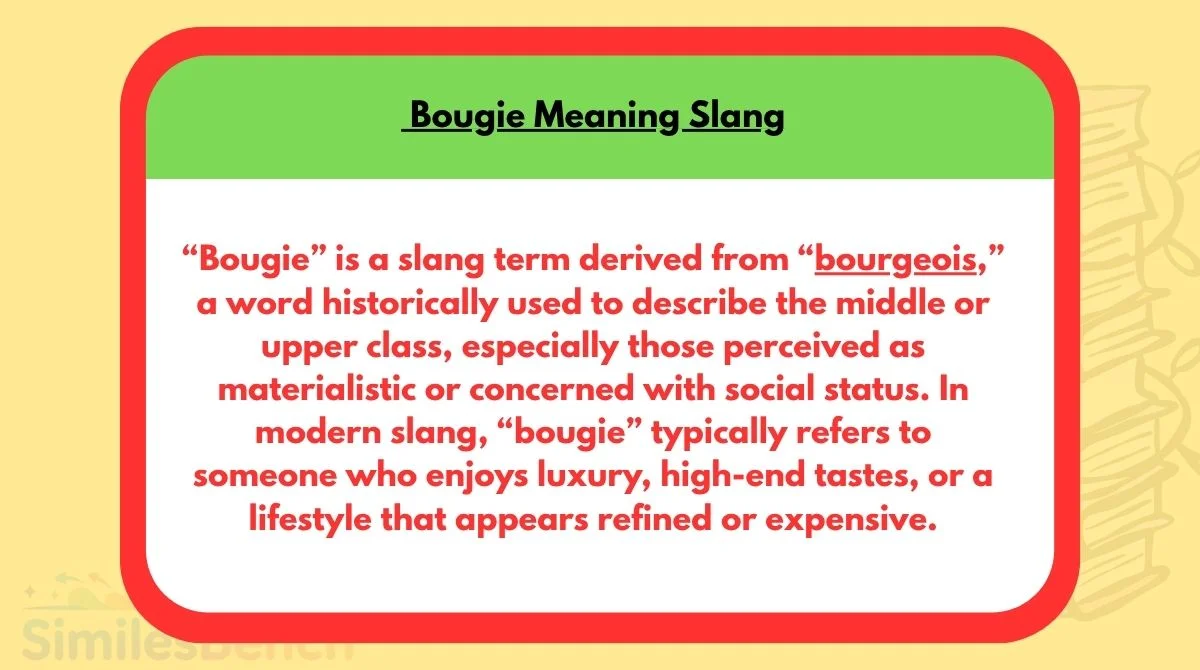
“Bougie Meaning Slang” is a slang term derived from “bourgeois,” a word historically used to describe the middle or upper class, especially those perceived as materialistic or concerned with social status. In modern slang, “bougie” typically refers to someone who enjoys luxury, high-end tastes, or a lifestyle that appears refined or expensive.
However, the meaning isn’t always literal. It can be used in both positive and negative ways:
- Positive use: Suggests someone has good taste or enjoys finer things
- Negative use: Implies someone is pretentious, trying too hard, or acting “above others”
For example:
- “She’s so bougie—only drinks imported coffee.” (playful or admiring)
- “He’s acting bougie now that he got money.” (critical)
The tone depends heavily on context, relationship, and delivery. Among friends, it’s often lighthearted. In other cases, it may carry judgment.
Background & History
The term “Bougie Meaning Slang” originates from the French word “bourgeoisie,” referring to the social class between the working class and aristocracy. During historical periods, especially in Europe, the bourgeoisie were known for economic power and growing influence.
Over time, the word took on political and cultural meanings, especially in discussions about capitalism and class structure. Eventually, it evolved into a shortened, more casual form—“bougie”—used in everyday language.
In modern culture, especially through music, social media, and entertainment, the term became widely popular. It was often used to describe lifestyle choices, fashion preferences, or behavior associated with wealth or perceived sophistication.
Today, the word is less about actual class status and more about attitude, style, and perception.
Usage of Bougie Meaning Slang in Various Contexts
“Bougie” is versatile and appears in many everyday situations:
1. Lifestyle & Habits
People use it to describe expensive or refined preferences:
- Fancy restaurants
- Designer brands
- Organic or premium products
2. Humor & Jokes
Friends may tease each other playfully:
- “You’re too bougie for street food now?”
3. Social Commentary
It can reflect opinions about behavior:
- “They forgot their roots and became bougie.”
4. Self-Description
Some people proudly call themselves bougie:
- “I like nice things—I’m a little bougie.”
5. Online & Memes
The term frequently appears in captions and memes to exaggerate luxury or preferences.
Its flexibility makes it widely used but also easy to misunderstand if tone isn’t clear.
Common Misconceptions & Clarifications
There are several misunderstandings about “bougie”:
- It doesn’t always mean rich
Someone can be called bougie even without wealth—it’s about behavior or taste. - It’s not always an insult
Many people use it jokingly or even as a compliment. - It’s not strictly negative
Context determines whether it sounds judgmental or playful. - It doesn’t mean fake in every case
While sometimes used critically, it doesn’t automatically imply dishonesty.
Understanding tone is key to interpreting the meaning correctly.
Similar Terms & Alternatives
There are several slang and descriptive words related to “bougie”:
- Fancy – neutral, describes elegance
- High-maintenance – implies demanding tastes
- Snobbish – negative, judgmental tone
- Classy – positive, refined behavior
- Pretentious – negative, trying to impress
Each carries a slightly different tone, so choosing the right one depends on what you want to express.
How to Respond to This Term
If someone calls you “bougie,” your response depends on intent:
- If playful:
“Maybe I just have good taste!” - If teasing:
Laugh it off or respond humorously - If critical:
Clarify your perspective calmly - If you agree:
“I like nice things, nothing wrong with that.”
The best response is to match the tone—don’t overreact unless it’s clearly negative.
Regional or Cultural Differences
The meaning and tone of “bougie” can vary across regions and cultures:
- In some communities, it’s used humorously and frequently
- In others, it may carry stronger social or class-based criticism
- Online culture tends to use it more lightly and creatively
Cultural background often influences whether the term feels harmless or offensive.
Comparison with Similar Terms
“Bougie” is often confused with other terms, but there are key differences:
- Bougie vs Classy
Classy is always positive; bougie can be mixed - Bougie vs Snobbish
Snobbish is clearly negative; bougie can be playful - Bougie vs Rich
Rich refers to wealth; bougie refers to behavior or taste
These distinctions help avoid misusing the term.
Usage in Online Communities & Dating Apps
On social media and dating platforms, “Bougie Meaning Slang” is commonly used to describe personality or lifestyle:
- Profiles may say: “A little bougie but fun”
- It signals someone enjoys comfort, luxury, or quality experiences
- It can attract like-minded people with similar tastes
In these contexts, it’s usually positive or humorous rather than critical.
Hidden or Offensive Meanings
Although often harmless, “bougie” can sometimes carry deeper or sensitive implications:
- It may suggest someone is disconnected from their background
- It can be used to criticize social climbing
- In certain contexts, it may feel judgmental or dismissive
Because of this, tone and audience awareness are important when using the term.
Suitability for Professional Communication
“Bougie” is not suitable for formal or professional settings. It is considered informal slang and may come across as unprofessional or unclear.
In workplace communication, it’s better to use alternatives like:
- “Refined”
- “Premium”
- “High-end”
Keeping language appropriate ensures clarity and professionalism.
FAQs
What does bougie mean in simple terms?
It means liking luxury or acting fancy.
Is bougie a compliment or insult?
It can be both, depending on tone.
Can someone be bougie without being rich?
Yes, it’s about behavior, not wealth.
Is bougie the same as snobbish?
No, snobbish is more negative.
Why do people use bougie online?
To describe lifestyle or joke about preferences.
Should I use bougie in formal writing?
No, it’s informal slang.
Conclusion
“Bougie” is a modern slang term with roots in history but shaped by today’s culture. It describes a taste for luxury or refined living, but its meaning depends heavily on context. Whether used as a compliment, joke, or criticism, understanding its tone helps you communicate more effectively and avoid misunderstandings.
As with many slang terms, awareness of audience and situation is key. Used correctly, “bougie” can add personality and humor to conversations—but in the wrong setting, it may feel out of place. Knowing when and how to use it ensures you stay both expressive and appropriate.