The slang term Ratchet meaning slang has become widely used across social media, music, and everyday conversations, leaving many people curious about its meaning and proper usage. People often search for this term because it can sound confusing, offensive, or even humorous depending on the context.
While it originally had a neutral meaning related to tools, its slang usage has evolved into something very different. Understanding what “Ratchet meaning slang” means helps avoid misunderstandings, especially in social or professional settings.
This article breaks down the meaning, history, cultural context, and appropriate use of the term in a clear and structured way. Whether you’ve seen it on TikTok, heard it in songs, or encountered it in chats, this guide will help you fully understand how “ratchet” is used today and how to respond to it appropriately.
Definition & Meaning
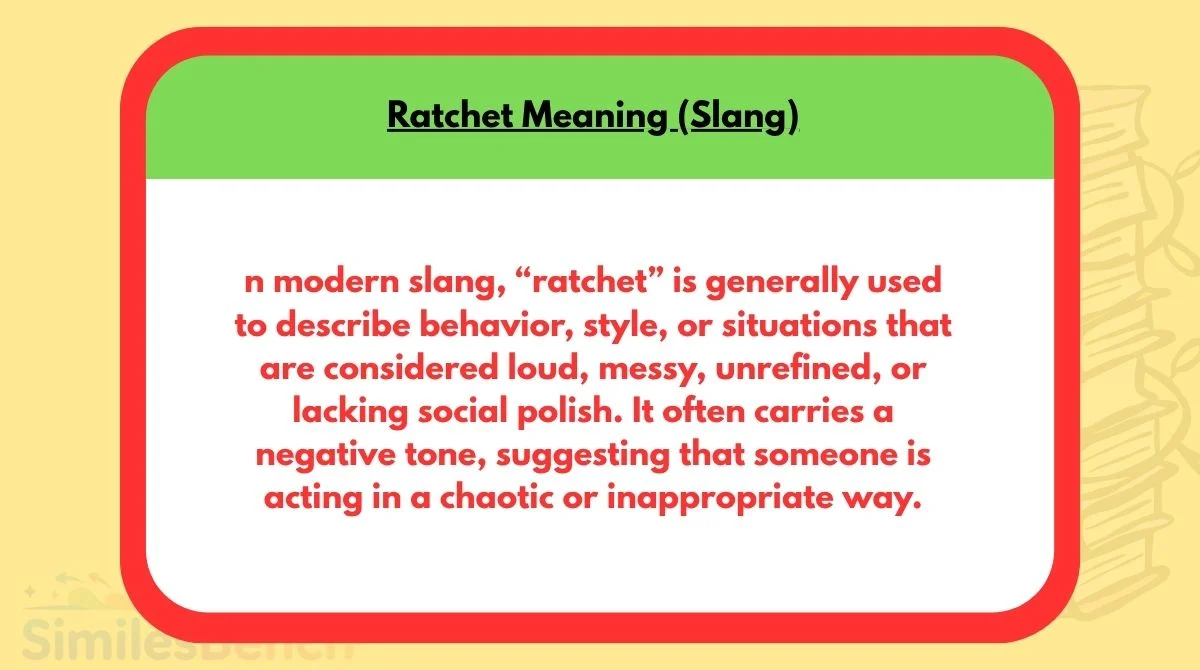
In modern slang, “ratchet” is generally used to describe behavior, style, or situations that are considered loud, messy, unrefined, or lacking social polish. It often carries a negative tone, suggesting that someone is acting in a chaotic or inappropriate way.
For example, if someone says, “That party got ratchet,” they usually mean the event became wild or out of control. Similarly, calling a person “ratchet” might imply that their behavior is perceived as embarrassing or overly dramatic.
However, the meaning is not always strictly negative. In some contexts, especially among friends or within certain communities, “ratchet” can be used playfully or even positively to describe someone who is bold, carefree, or unapologetically expressive.
The interpretation depends heavily on tone, relationship between speakers, and cultural context. Because of this flexibility, the term can easily be misunderstood or taken as offensive if used incorrectly.
Background & History
The word “ratchet” originally comes from mechanical terminology, referring to a device that allows movement in one direction only. This literal meaning has no connection to its slang usage today.
The slang version of “ratchet” is believed to have originated in Southern United States hip-hop culture, particularly in Louisiana. It gained popularity in the early 2000s through music and regional speech patterns. Over time, it spread into mainstream culture through social media platforms, music videos, and viral trends.
As it became more widely used, the meaning shifted and expanded. What started as a regional slang term became a global expression, especially among younger audiences. Today, it is commonly seen in memes, captions, and online conversations.
Despite its popularity, the term still carries cultural roots that are important to recognize. Misusing it without understanding its background can sometimes come across as insensitive or inappropriate.
Usage in Various Contexts
“Ratchet meaning slang” can appear in many different contexts, each slightly altering its meaning:
- Social Settings: Used to describe wild parties or dramatic situations.
- Personal Behavior: Refers to someone acting loudly, aggressively, or without restraint.
- Fashion & Style: Sometimes used to criticize outfits considered overly flashy or mismatched.
- Humor & Friends: Among close friends, it may be used jokingly without harmful intent.
For example:
- “Things got ratchet after midnight.”
- “Stop being ratchet!” (could be playful or critical depending on tone)
The key factor is context. In casual environments, the term may feel lighthearted. In formal or unfamiliar settings, it can be seen as rude or disrespectful.
Common Misconceptions & Clarifications
One major misconception is that “ratchet” always means something extremely negative. While it often has a critical tone, it is not always meant to insult.
Another misunderstanding is that it is universally acceptable slang. In reality, its meaning and impact vary depending on cultural awareness and social sensitivity.
Some people also confuse “ratchet” with “trendy” or “cool,” which is not accurate. While it can sometimes imply boldness, it does not generally mean stylish in a positive sense.
Clarifying intent is important. The same word can either offend or amuse depending on how it is used and who is listening.
Similar Terms & Alternatives
There are several slang terms with overlapping meanings:
- Messy – chaotic or dramatic
- Wild – energetic or uncontrolled
- Extra – overly dramatic or attention-seeking
- Trashy – lacking class (more clearly offensive)
- Chaotic – unpredictable behavior
These alternatives may be safer in certain situations, especially when trying to avoid sounding offensive. Choosing the right word depends on the tone you want to convey.
How to Respond to This Term
If someone calls you “ratchet,” your response depends on the situation:
- Playful Context: Laugh it off or respond humorously.
- Neutral Context: Ask what they mean for clarification.
- Offensive Context: Address it calmly or set boundaries.
For example:
- “What do you mean by that?”
- “I don’t think that’s fair.”
- “Let’s keep things respectful.”
Understanding intent before reacting helps avoid unnecessary conflict.
Regional or Cultural Differences
The interpretation of “ratchet” can vary significantly across regions and cultures. In the United States, especially in certain communities, the term is more commonly understood and used in casual speech.
In other countries, including Pakistan or parts of Europe, people may encounter the word mainly through social media, often without full awareness of its background. This can lead to misuse or confusion.
Cultural sensitivity plays an important role. Using slang without understanding its roots can sometimes lead to unintended offense.
Comparison with Similar Terms
Compared to similar slang:
- “Ratchet” vs Messy: “Messy” is softer and less judgmental.
- “Ratchet” vs Trashy: “Trashy” is harsher and more insulting.
- “Ratchet” vs Wild: “Wild” can be positive or fun, while “ratchet” leans more negative.
This comparison shows that “ratchet” sits somewhere between playful criticism and direct insult, depending on context.
Usage in Online Communities & Dating Apps
On platforms like social media or dating apps, “ratchet” is often used casually in bios, captions, or comments. It may describe personality traits, humor style, or social behavior.
Examples:
- “A little ratchet, a little classy”
- “No ratchet vibes please”
In these spaces, the term is often exaggerated for humor or personality expression. However, it can still be misunderstood, especially in diverse or international audiences.
Hidden or Offensive Meanings
While sometimes used lightly, “ratchet” can carry deeper, more sensitive implications. In certain contexts, it may be used to stereotype or judge specific groups unfairly.
Because of this, it can be considered offensive if directed at someone in a serious or negative way. The tone and intent matter greatly.
Being mindful of how it may affect others is important when using the term.
Suitability for Professional Communication
“Ratchet” is not suitable for professional or formal communication. It is informal slang and can be seen as disrespectful or unprofessional in workplaces, academic settings, or official conversations.
Instead, more neutral and respectful language should be used to describe behavior or situations.
FAQs
What does ratchet mean in slang?
It usually describes behavior that is loud, messy, or lacking social polish.
Is ratchet always an insult?
No, it can be playful among friends but often has a negative tone.
Where did the slang ratchet come from?
It originated in Southern U.S. hip-hop culture.
Can ratchet be used positively?
Sometimes, it can describe bold or carefree behavior in a fun way.
Is it okay to use ratchet in formal settings?
No, it is considered informal and unprofessional.
How should I react if someone calls me ratchet?
Stay calm, ask for clarification, or respond based on context.
Conclusion
The slang term “ratchet” is a complex and context-dependent expression that has evolved far beyond its original meaning. While it is widely used in casual conversations and online spaces, it carries nuances that can make it either humorous or offensive.
Understanding its background, usage, and cultural significance is essential for using it appropriately. By being mindful of context and audience, you can avoid misunderstandings and communicate more effectively. Slang continues to evolve, but awareness remains key to respectful and clear communication.