Language on the internet evolves quickly, and slang terms often rise to popularity overnight. One such term that has gained widespread attention is “mid.” People search for its meaning because they frequently encounter it on social media platforms, in conversations, and especially in online reviews or comments. Understanding this term helps users better interpret opinions, reactions, and even humor in digital communication.
“Mid” is commonly used to express a judgment or evaluation, often in a casual or blunt way. While it may seem simple, its meaning can vary slightly depending on context, tone, and region.
This makes it important to explore not just the definition, but also how it’s used, misunderstood, and interpreted in different environments. Whether you’re scrolling through comments or chatting with friends, knowing what “mid” means can help you stay culturally aware and communicate more effectively.
Definition & Meaning
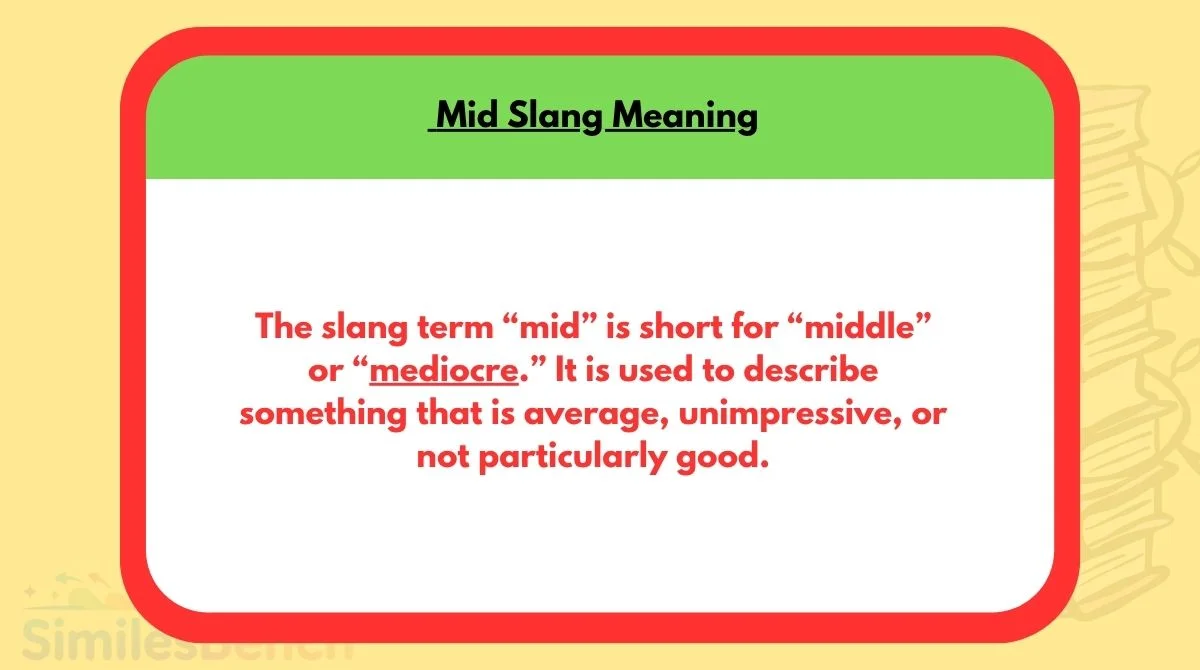
The slang term “mid” is short for “middle” or “mediocre.” It is used to describe something that is average, unimpressive, or not particularly good. When someone calls something “mid,” they are essentially saying it’s neither terrible nor great—it just doesn’t stand out.
For example, if someone watches a movie and says, “That was mid,” they mean it wasn’t exciting or memorable. It’s a neutral-to-negative judgment, often leaning slightly toward criticism. The tone can sometimes feel dismissive because it implies that the subject isn’t worth strong praise or attention.
Unlike harsh criticism, “mid” doesn’t suggest something is bad—it simply lacks quality or uniqueness. This makes it a popular term in casual conversations where people want to express mild disappointment without being overly harsh.
Background & History
The term “mid” originated from urban slang and has roots in hip-hop culture, where it was used to describe low-quality or average cannabis. Over time, its meaning expanded beyond that specific context and entered mainstream internet language.
With the rise of social media platforms like TikTok, Twitter, and Instagram, “mid” became widely adopted by younger audiences. Influencers and content creators began using it to review everything from music and fashion to food and entertainment. Its short, punchy nature made it ideal for quick reactions and viral content.
The simplicity of the word contributed to its rapid spread. Unlike more complex slang, “mid” is easy to understand and apply, which helped it cross cultural and linguistic boundaries. Today, it is part of everyday online vocabulary.
Usage in Various Contexts
“Mid” can be used in a wide range of situations, making it highly versatile. In entertainment, it’s often used to critique movies, songs, or shows. For example, a new album might be labeled “mid” if it fails to meet expectations.
In fashion, someone might describe an outfit as “mid” if it looks average or unoriginal. Similarly, in food reviews, a meal that doesn’t impress might earn the same label.
The tone of “mid” can vary depending on delivery. In some cases, it’s used jokingly among friends, while in others, it can come across as blunt or dismissive. Context and relationship between speakers play a big role in how it is received.
Common Misconceptions & Clarifications
A common misconception is that “mid” means something is bad. In reality, it simply means average. It does not carry the same negativity as words like “terrible” or “awful.”
Another misunderstanding is that calling something “mid” is always insulting. While it can feel dismissive, it is often used casually without the intention to offend. However, tone and context matter—what feels like light criticism to one person might feel harsh to another.
It’s also important to note that “mid” is subjective. What one person considers average, another might find enjoyable or even excellent.
Similar Terms & Alternatives
There are several terms similar to “mid” that convey a comparable meaning. Words like “average,” “mediocre,” “so-so,” and “okay” are common alternatives. Each carries a slightly different tone, but all suggest a lack of excitement or distinction.
In slang, phrases like “nothing special” or “basic” are often used in a similar way. While “basic” can sometimes carry a stronger negative connotation, it overlaps with “mid” in many contexts.
Choosing between these terms often depends on how formal or casual the situation is.
How to Respond to This Term
If someone calls something you like “mid,” the best response depends on your perspective. You can simply acknowledge their opinion and move on, or you can explain why you disagree.
A calm response might be, “I actually enjoyed it,” which keeps the conversation respectful. If used humorously, you can respond with a light joke or playful disagreement.
Avoid taking it too personally, especially in casual settings. Remember that “mid” reflects personal taste rather than an objective truth.
Regional or Cultural Differences
While “mid” is widely used in English-speaking online communities, its popularity is strongest among younger audiences, particularly in North America and parts of Europe. However, due to social media, it has spread globally, including regions like South Asia.
In some cultures, direct criticism is less common, so using “mid” might feel unusually blunt. In others, it fits naturally into casual conversation.
The interpretation of the term can vary slightly depending on cultural norms and communication styles.
Comparison with Similar Terms
Compared to words like “bad” or “terrible,” “mid” is much softer. It suggests indifference rather than strong dislike. On the other hand, compared to “good” or “great,” it clearly signals a lack of enthusiasm.
“Mid” sits in the middle of the evaluation spectrum, making it useful for expressing moderate opinions. Its neutrality is part of what makes it so popular—it allows people to critique without being overly harsh.
Usage in Online Communities & Dating Apps
In online communities, “mid” is often used in comment sections, reviews, and memes. It’s a quick way to summarize an opinion without writing a detailed explanation.
On dating apps, the term can appear in bios or conversations. For example, someone might describe a date or profile as “mid,” implying it didn’t stand out. This usage can sometimes come across as dismissive or overly critical.
Because tone is harder to interpret in text, it’s important to be mindful when using slang in these contexts.
Hidden or Offensive Meanings
While “mid” is generally harmless, it can sometimes feel offensive depending on how it’s used. Calling someone’s work or appearance “mid” can be perceived as dismissive or disrespectful.
In certain contexts, it may also be used to undermine someone’s effort or achievements. Therefore, it’s important to consider the impact of your words, especially in sensitive situations.
Suitability for Professional Communication
“Mid” is not suitable for professional or formal communication. In workplaces, academic writing, or official settings, it’s better to use terms like “average” or “needs improvement.”
Using slang in professional environments can appear unprofessional or unclear. It’s best reserved for casual conversations and informal settings.
FAQs
What does “mid” mean in slang?
It means something is average or mediocre.
Is “mid” an insult?
Not always, but it can feel dismissive.
Where did “mid” come from?
It originated in urban slang and became popular online.
Can “mid” be used positively?
Rarely; it usually implies mild criticism.
Is “mid” appropriate in formal settings?
No, it’s best for casual conversations.
Why do people use “mid” so often?
It’s short, simple, and easy to understand.
Conclusion
The slang term “mid” has become a staple of modern digital communication, offering a quick and simple way to describe something as average. Its widespread use reflects the fast-paced nature of online interactions, where brevity and clarity are valued.
While it may seem harmless, understanding its tone and context is essential to avoid misunderstandings. Whether you’re using it casually or interpreting it in conversations, recognizing its meaning helps you stay in tune with current language trends and communicate more effectively.