Cap slang meaning has become one of the most searched phrases in recent years, especially among younger internet users. If you’ve spent any time on social media platforms like TikTok, Instagram, or Twitter, you’ve probably seen people saying things like “that’s cap” or “no cap.” But what does it actually mean?
People search for this term because it’s widely used in casual conversations, memes, and online debates, yet its meaning isn’t always obvious to everyone.
Slang evolves quickly, and staying updated helps you understand conversations better and communicate more naturally in digital spaces. This article breaks down everything you need to know about cap slang meaning, from its definition to how to use it correctly in different contexts.
🧠 Definition & Meaning
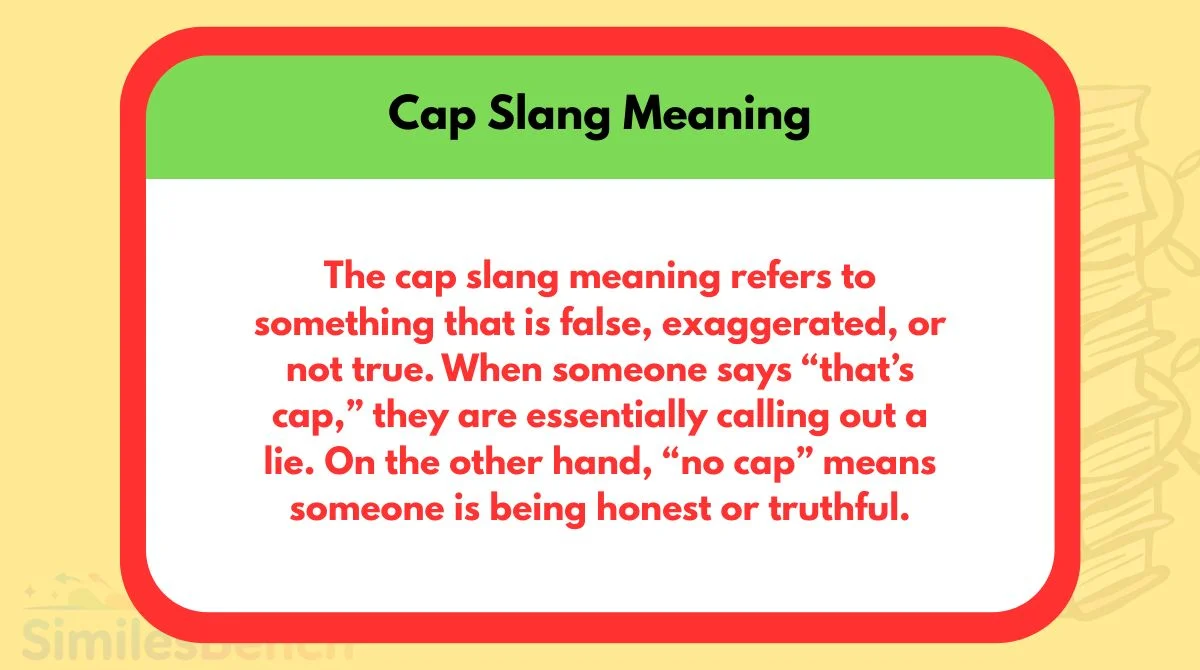
The cap slang meaning refers to something that is false, exaggerated, or not true. When someone says “that’s cap,” they are essentially calling out a lie. On the other hand, “no cap” means someone is being honest or truthful.
For example:
- “I scored 100 points in one game.” → “That’s cap.”
- “No cap, this is the best food I’ve ever had.”
This slang is commonly used in informal conversations, especially among younger audiences. It’s quick, expressive, and adds a casual tone to communication.
The word “cap” itself doesn’t literally mean a hat in this context. Instead, it symbolizes deception or exaggeration. The simplicity of the term is part of why it became so popular—it’s easy to use and understand once you know the meaning.
📜 Background & History
The origin of cap slang meaning can be traced back to African American Vernacular English (AAVE). It started gaining popularity in hip-hop culture and music before spreading widely through social media.
The term “cap” was used as early as the early 2000s, but it became mainstream around 2017–2019. Artists and influencers played a major role in bringing it into everyday language. Songs, viral videos, and memes helped push the phrase into global usage.
Over time, “no cap” became just as popular as “cap.” While “cap” calls out dishonesty, “no cap” emphasizes truth. This dual usage made the slang more versatile and widely adopted.
Today, it’s used globally, even by people who may not know its cultural roots. This widespread adoption shows how internet culture can rapidly transform and distribute language.
💬 Usage in Various Contexts
The cap slang meaning can change slightly depending on how it’s used. It appears in different types of conversations:
- Casual Conversations: Friends use it to joke or challenge each other.
- “You woke up at 5 AM? Cap.”
- Social Media: Often used in comments or captions.
- “Best movie ever, no cap.”
- Gaming Communities: Players use it to call out exaggerations.
- “I carried the whole team.” → “Cap.”
- Music & Pop Culture: Lyrics often include “no cap” to stress honesty.
Tone matters a lot. Sometimes it’s playful, and other times it can sound confrontational. Understanding context helps avoid misunderstandings.
❌ Common Misconceptions & Clarifications
One common misunderstanding of cap slang meaning is that it simply means “joking.” While it can be used humorously, it specifically refers to something being untrue.
Another misconception is that “cap” always sounds aggressive. In reality, it often depends on tone and relationship. Among friends, it’s usually lighthearted.
Some people also confuse “cap” with other slang words like “fake” or “lie.” While similar, “cap” often carries a more casual and trendy tone.
🔁 Similar Terms & Alternatives
There are several alternatives to express the cap slang meaning:
- “That’s fake”
- “You’re lying”
- “Not true”
- “Exaggeration”
- “No way”
For “no cap,” alternatives include:
- “Honestly”
- “For real”
- “Seriously”
These options are more suitable in formal settings, where slang might not be appropriate.
🗣️ How to Respond to This Term
When someone uses cap slang meaning toward you, your response depends on the situation:
- If they’re joking: Respond playfully.
- “No cap, I’m serious!”
- If they doubt you: Clarify your point.
- “I’m not kidding, it’s true.”
- If it feels rude: Stay calm and explain.
- “I’m being honest here.”
Understanding tone helps you respond appropriately without escalating the situation.
🌍 Regional or Cultural Differences
Although cap slang meaning originated in AAVE, it is now used worldwide. However, its interpretation can vary:
- In Western countries, it’s widely understood among younger generations.
- In other regions, people may recognize it but not use it frequently.
- Older audiences might not be familiar with it at all.
Cultural context matters. Using slang in the wrong setting can lead to confusion.
⚖️ Comparison with Similar Terms
Compared to words like “lie” or “fake,” cap slang meaning feels more informal and trendy. It’s less harsh than directly accusing someone of lying.
- “You’re lying” → Direct and serious
- “That’s cap” → Casual and expressive
This makes it more suitable for friendly or relaxed conversations.
💻 Usage in Online Communities & Dating Apps
In online spaces, cap slang meaning is extremely popular:
- Social Media: Used in comments and memes
- Gaming Chats: Quick way to challenge statements
- Dating Apps: Adds humor or personality
- “I’m the funniest person you’ll meet, no cap.”
It helps people sound relatable and modern, but overuse can make communication feel less genuine.
⚠️ Hidden or Offensive Meanings
Generally, cap slang meaning is not offensive. However, tone can change how it’s perceived.
Calling someone out repeatedly with “cap” might seem dismissive or disrespectful. In certain contexts, it can come across as questioning someone’s honesty too directly.
🏢 Suitability for Professional Communication
Using cap slang meaning in professional settings is not recommended. It may appear unprofessional or confusing.
Instead, use clear and formal alternatives like:
- “That may not be accurate”
- “I disagree”
- “Can you clarify?”
Slang is best reserved for casual conversations.
FAQs
What does cap mean in slang?
It means something is false or not true.
What does no cap mean?
It means being honest or truthful.
Is cap slang rude?
Not usually, but tone can make it sound rude.
Where did cap slang come from?
It originated from AAVE and gained popularity through music and social media.
Can I use cap in formal writing?
No, it’s better to avoid slang in professional contexts.
Why is cap slang so popular?
It’s simple, expressive, and widely used online.
🧾 Conclusion
Understanding cap slang meaning helps you stay connected with modern communication trends. It’s a simple yet powerful expression used to call out false statements or emphasize honesty.
While it’s fun and widely used, knowing when and where to use it is important. In casual settings, it adds personality, but in professional environments, it’s best to stick to formal language.