Flower Similes have inspired writers for centuries. Their colors, shapes, and gentle beauty make them perfect for creating vivid comparisons. That is why flower similes are so popular in stories, poems, essays, and everyday conversations.
A simile helps readers picture something more clearly by comparing two things using words like as or like. When flowers become part of a simile, they add beauty, emotion, and imagination to your writing. Whether you are a student, a young writer, or simply someone who loves language, these flower similes can make your sentences more expressive and memorable.
What Is a Simile?
A simile is a figure of speech that compares two different things using the words like or as.
For example, instead of saying someone is beautiful, you might say they are as lovely as a rose. As a result, the reader can imagine that beauty more clearly.
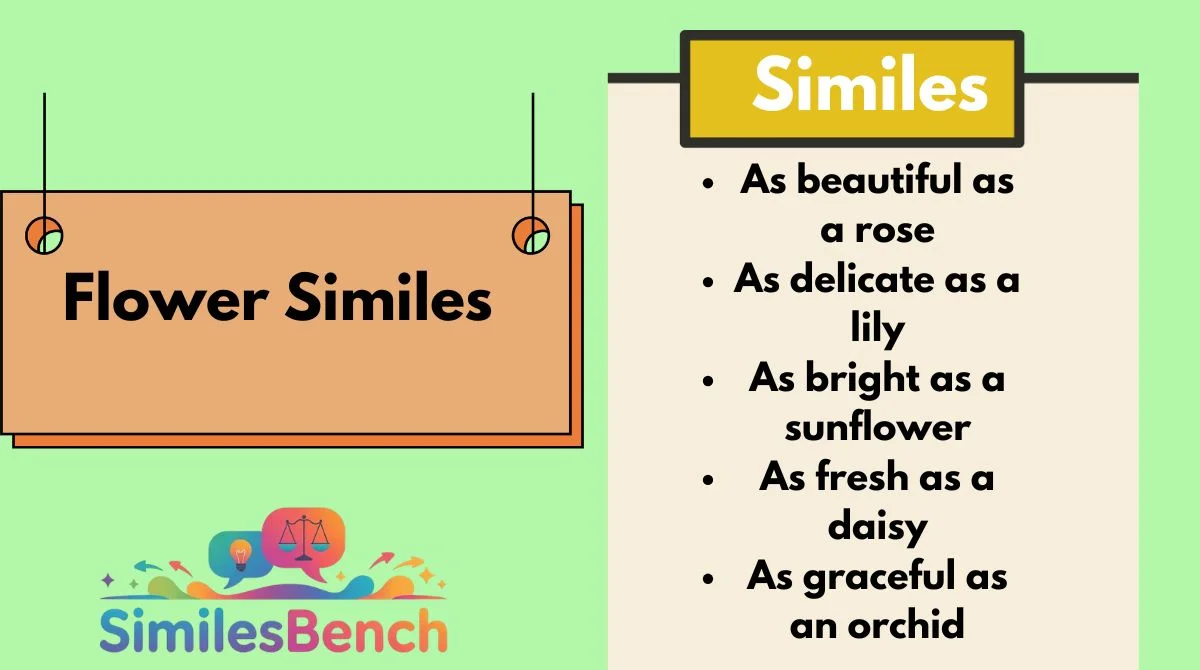
Full List of Flower Similes
- As beautiful as a rose
- As delicate as a lily
- As bright as a sunflower
- As fresh as a daisy
- As graceful as an orchid
- As colorful as a garden in bloom
- As gentle as a flower petal
- As fragrant as jasmine
- As cheerful as a field of wildflowers
- As soft as a rose petal
- As elegant as a tulip
- As radiant as a blooming flower
1. As beautiful as a rose
Meaning: Extremely beautiful.
Explanation: Roses are often seen as symbols of beauty and love.
Examples:
- She looked as beautiful as a rose on her wedding day.
- The little girl smiled, looking as beautiful as a rose in the sunshine.
2. As delicate as a lily
Meaning: Very gentle and fragile.
Explanation: Lilies have soft petals that can be damaged easily.
Examples:
- Her hands were as delicate as a lily.
- The tiny decoration seemed as delicate as a lily in the wind.
3. As bright as a sunflower
Meaning: Full of happiness and energy.
Explanation: Sunflowers are known for their bold yellow color and sunny appearance.
Examples:
- His face was as bright as a sunflower after hearing the good news.
- The classroom felt as bright as a sunflower because of the children’s excitement.
4. As fresh as a daisy
Meaning: Healthy, energetic, and refreshed.
Explanation: Daisies often represent freshness and new beginnings.
Examples:
- After a good night’s sleep, she felt as fresh as a daisy.
- Despite the long journey, he looked as fresh as a daisy.
5. As graceful as an orchid
Meaning: Very elegant and attractive.
Explanation: Orchids are admired for their unique and graceful appearance.
Examples:
- The dancer moved as graceful as an orchid swaying gently.
- She walked across the stage as graceful as an orchid.
6. As colorful as a garden in bloom
Meaning: Filled with many bright colors.
Explanation: A blooming garden displays a wide range of beautiful colors.
Examples:
- The festival was as colorful as a garden in bloom.
- Her painting looked as colorful as a garden in bloom.
7. As gentle as a flower petal
Meaning: Very kind and soft.
Explanation: Flower petals are smooth, light, and delicate.
Examples:
- The nurse was as gentle as a flower petal with the child.
- His voice sounded as gentle as a flower petal.
8. As fragrant as jasmine
Meaning: Having a lovely and noticeable scent.
Explanation: Jasmine flowers are famous for their sweet fragrance.
Examples:
- The garden was as fragrant as jasmine after the rain.
- Her perfume seemed as fragrant as jasmine.
9. As cheerful as a field of wildflowers
Meaning: Full of joy and positivity.
Explanation: Wildflowers create a bright and uplifting scene.
Examples:
- The children were as cheerful as a field of wildflowers during the picnic.
- Her laughter was as cheerful as a field of wildflowers.
10. As soft as a rose petal
Meaning: Extremely smooth and soft.
Explanation: Rose petals are often used as a symbol of softness.
Examples:
- The blanket felt as soft as a rose petal.
- The baby’s skin was as soft as a rose petal.
11. As elegant as a tulip
Meaning: Stylish and refined.
Explanation: Tulips have a neat and balanced shape that suggests elegance.
Examples:
- The bride looked as elegant as a tulip in her gown.
- The room appeared as elegant as a tulip arrangement.
12. As radiant as a blooming flower
Meaning: Glowing with beauty, happiness, or health.
Explanation: Flowers in full bloom naturally attract attention.
Examples:
- She looked as radiant as a blooming flower after achieving her goal.
- The young athlete appeared as radiant as a blooming flower on award day.
Creative Writing Tips
Flower similes can make writing more colorful and emotional. However, it is important to use them naturally.
In Stories
Use flower similes to describe characters, places, and feelings. For instance, instead of saying a character is happy, you could write that they were as bright as a sunflower. As a result, readers can picture the emotion more clearly.
In Poems
Poetry often relies on strong images. Therefore, flower similes can help create beauty and rhythm. They also make simple ideas feel more artistic.
In Essays
Essays should be clear, but they do not have to be boring. A well-placed simile can make descriptions more interesting. However, use them carefully so they support your point rather than distract from it.
In Songs
Songwriters frequently use flowers to express love, hope, and memories. Because flowers carry strong emotions, flower similes can make lyrics more memorable and meaningful.
Practical Tips
- Choose a flower that matches the feeling you want to show.
- Keep comparisons simple and easy to understand.
- Avoid using too many similes in one paragraph.
- Read your sentence aloud to check if it sounds natural.
- Try creating your own flower similes for unique writing.
Frequently Asked Questions
What are flower similes?
Flower similes are comparisons that use flowers to describe people, objects, emotions, or situations. They usually contain the words like or as.
Why are flower similes useful in writing?
They help readers imagine scenes more clearly. Furthermore, they add beauty, emotion, and creativity to your work.
What is the most common flower simile?
One of the most common examples is as beautiful as a rose. It is widely used to describe someone’s beauty.
Can students use flower similes in school assignments?
Yes. In fact, flower similes can improve stories, poems, essays, and creative writing projects.
How can I create my own flower simile?
First, think about a flower’s special quality. Then compare that quality to a person, object, or feeling using like or as.
Conclusion
Flower similes bring color, emotion, and imagination into writing. They help readers see, feel, and connect with your words in a deeper way. Whether you are writing a story, poem, essay, or song, these comparisons can make your work more memorable. Therefore, start using flower similes in your writing today and watch your descriptions bloom with creativity and charm.