Mid” Mean in Slang Language evolves quickly, especially in the digital age where social media platforms shape how people communicate. One slang term that has gained massive popularity in recent years is “mid.” Many people search for its meaning because they encounter it frequently in comments, memes, and conversations but aren’t always sure what it truly implies.
At first glance, “mid” may seem harmless or neutral, but its tone and intent can vary depending on context. It can be used casually among friends or as subtle criticism online. Understanding this term is important because using it incorrectly might lead to misunderstandings or even unintended offense.
This article breaks down the meaning of “mid,” explores its origins, explains how it is used across different platforms, and clarifies common misconceptions. Whether you’ve seen it on TikTok, in group chats, or on dating apps, you’ll gain a clear and practical understanding of how this slang fits into modern communication.
Definition & Meaning
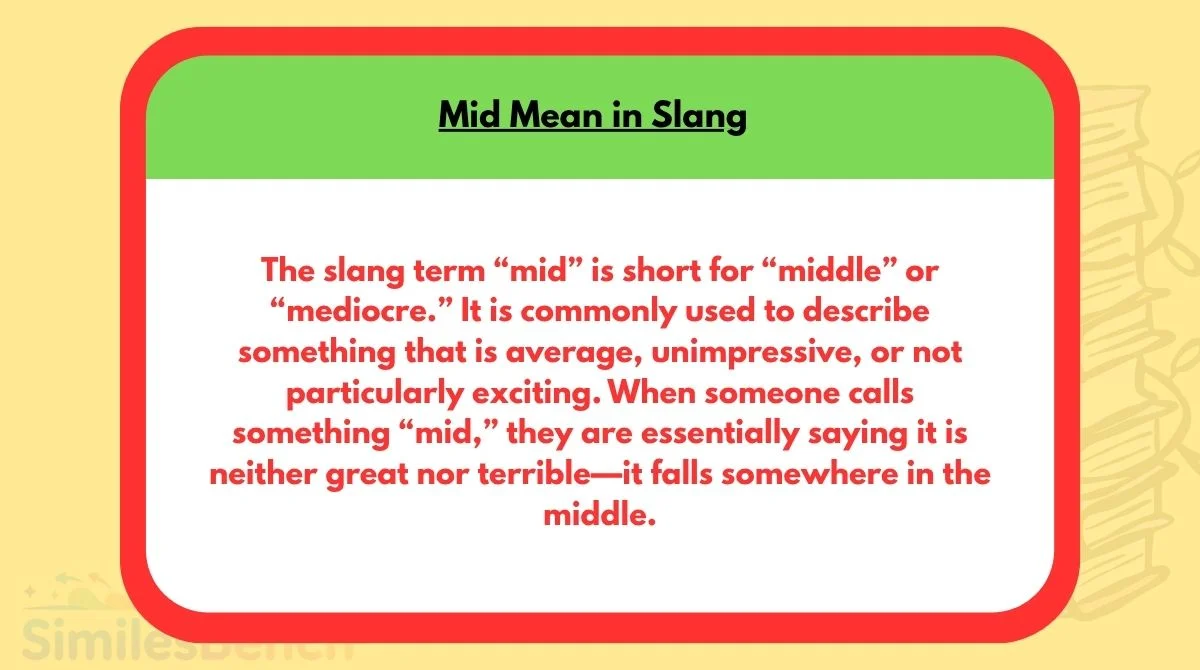
The slang term “mid” is short for “middle” or “mediocre.” It is commonly used to describe something that is average, unimpressive, or not particularly exciting. When someone calls something “mid,” they are essentially saying it is neither great nor terrible—it falls somewhere in the middle.
For example, if someone watches a movie and says, “That was mid,” they mean the movie wasn’t bad but didn’t stand out either. Similarly, it can apply to food, music, fashion, or even people’s opinions. The tone is often dismissive, suggesting that the subject doesn’t deserve much attention.
However, the meaning can shift slightly depending on delivery. In some cases, “mid” is used playfully among friends, without harsh intent. In other situations, especially online, it can be a subtle insult. Calling something “mid” might feel less aggressive than saying it’s bad, but it still carries a negative undertone.
The simplicity of the term is part of its appeal. It’s quick, easy to type, and widely understood in digital spaces. Because of this, “mid” has become a go-to expression for expressing mild disappointment or indifference.
Background & History
The word “mid” originally comes from standard English, where it simply means “middle” or “average.” However, its transformation into slang is relatively recent and is largely tied to internet culture and youth communication.
The term gained traction through social media platforms like TikTok, Twitter (now X), and Instagram. Influencers and content creators began using it casually in reviews and reactions. Over time, it spread into everyday conversations, especially among younger audiences.
A major factor in its popularity is meme culture. Online communities often favor short, punchy words that can quickly convey an opinion. “Mid” fits perfectly into this style—it’s concise yet expressive. As memes and viral content circulated, the term became normalized.
Another reason for its rise is the shift toward minimalistic communication. Instead of writing long critiques, users prefer quick judgments. Saying “mid” saves time while still delivering a clear message.
Although the term feels modern, its roots in describing “average quality” have always existed. What’s new is how widely and casually it is used today, especially in digital interactions.
Usage in Various Contexts
“Mid” can be used in many different situations, making it a versatile slang term. Its meaning stays consistent, but its tone changes based on context.
In entertainment, people often use it to review movies, songs, or shows. For instance, someone might say, “The new album is mid,” meaning it didn’t meet expectations. This usage is common in online discussions and comment sections.
In everyday conversation, it can describe experiences like food or events. Saying “That restaurant was mid” implies it wasn’t memorable. Among friends, this might come across as light criticism rather than harsh judgment.
On social media, “mid” is frequently used in debates or reactions. Users might label a trending topic, influencer, or product as “mid” to express disinterest. In these cases, it can feel dismissive or even slightly rude.
It’s also used humorously. Friends might jokingly call each other’s choices “mid” as playful teasing. The tone here depends heavily on the relationship between speakers.
Overall, the term adapts easily to different contexts, but understanding tone is key to avoiding misunderstandings.
Common Misconceptions & Clarifications
One common misconception is that “mid” means something is completely bad. In reality, it suggests something is average—not terrible, but not impressive either. This distinction is important because the term often carries subtle criticism rather than outright negativity.
Another misunderstanding is that it’s always offensive. While it can be used as a mild insult, it’s not inherently harsh. Among friends, it may simply be playful or casual.
Some people also think “mid” is only used for objects like movies or products. However, it can be applied to ideas, trends, and even performances. In certain contexts, it might be used to describe someone’s effort or opinion.
Clarifying these points helps avoid confusion and ensures the term is used appropriately.
Similar Terms & Alternatives
There are several slang and informal terms that carry meanings similar to “mid.” Words like “average,” “basic,” or “meh” are often used in similar ways. Each has its own nuance.
“Meh” usually expresses indifference or lack of enthusiasm, while “basic” can imply something is unoriginal or common. “Average” is more neutral and formal, lacking the casual tone of “mid.”
Other slang alternatives include “underwhelming” or “nothing special.” These phrases provide more detail but are less concise.
Choosing between these terms depends on tone and context. “Mid” stands out because of its simplicity and modern feel.
How to Respond to This Term
When someone uses “mid” to describe something you like, your response depends on the situation. If it’s a casual conversation, you might respond playfully or ignore it.
If you disagree, you can explain your perspective. For example, you might say, “I actually thought it was pretty good,” to share your opinion without conflict.
In online settings, it’s often best not to overreact. The term is commonly used casually, so taking it too seriously may escalate unnecessary arguments.
Understanding intent is key—sometimes it’s just a quick opinion, not a personal attack.
Regional or Cultural Differences
The use of “mid” is most common in English-speaking online communities, especially among younger audiences. It has strong ties to internet culture, which makes it widely understood across different countries.
However, its popularity may vary by region. In some areas, people might prefer other slang terms with similar meanings. Cultural context also influences how the term is perceived—what feels playful in one group might seem rude in another.
As global communication increases, terms like “mid” continue to spread beyond their original communities.
Comparison with Similar Terms
Compared to stronger negative terms, “mid” is relatively mild. Calling something “bad” is more direct, while “mid” softens the criticism.
Unlike “overrated,” which suggests something gets too much praise, “mid” focuses on lack of excitement. It doesn’t imply hype—just mediocrity.
This makes “mid” a subtle but effective way to express dissatisfaction without being overly harsh.
Usage in Online Communities & Dating Apps
In online communities, “mid” is often used in quick reactions. Users comment on posts, videos, or trends with a simple “mid” to express their opinion.
On dating apps, it can appear in conversations or profiles. For example, someone might describe certain experiences or preferences as “mid.” In this context, it can influence impressions, sometimes making the speaker seem casual or blunt.
Because tone is harder to interpret online, using “mid” in these spaces can sometimes lead to misunderstandings.
Hidden or Offensive Meanings
While “mid” is generally mild, it can become offensive depending on context. When directed at a person, it may come across as dismissive or insulting.
For example, calling someone’s appearance or effort “mid” can feel disrespectful. Even though the word itself isn’t harsh, the implication can still hurt.
Understanding the potential impact helps avoid unintentional offense.
Suitability for Professional Communication
“Mid” is not suitable for formal or professional settings. It is considered slang and may appear unprofessional in emails, reports, or workplace discussions.
Instead, more formal terms like “average,” “adequate,” or “needs improvement” should be used. These alternatives communicate the same idea more appropriately.
Using the right language for the setting ensures clear and respectful communication.
FAQs
What does “mid” mean in simple words?
It means something is average or not impressive.
Is “mid” an insult?
It can be mild criticism but not always harsh.
Can “mid” be used for people?
Yes, but it may sound rude.
Is “mid” positive or negative?
Mostly neutral to slightly negative.
Where is “mid” commonly used?
On social media and in casual conversations.
Should I use “mid” in formal writing?
No, it’s too informal.
Conclusion
The slang term “mid” reflects how modern communication favors simplicity and quick expression. While it primarily means “average” or “mediocre,” its tone can vary from playful to dismissive depending on context.
Understanding its meaning, usage, and potential impact allows you to use it appropriately and interpret it correctly when others do. As with any slang, awareness of audience and setting is key to effective communication.