The term “NPC Slang Meaning” has become one of the most popular internet slang expressions in online culture. People frequently search for the meaning of NPC slang because they see it used on social media platforms, gaming communities, memes, dating apps, and online discussions.
While the word originally came from the gaming world, its meaning has expanded far beyond video games.
Today, NPC is often used to describe someone who appears unoriginal, predictable, or simply follows trends without independent thinking. Depending on the context, the term can be humorous, sarcastic, insulting, or even playful. Because of its growing popularity, many users want to understand exactly what it means, where it came from, and whether it can be offensive.
Understanding NPC slang meaning is important because internet language changes quickly, and words can carry different tones in different communities. This article explains the meaning, history, usage, misconceptions, and cultural impact of the term in a simple and easy-to-understand way.
NPC Slang Meaning Definition & Meaning
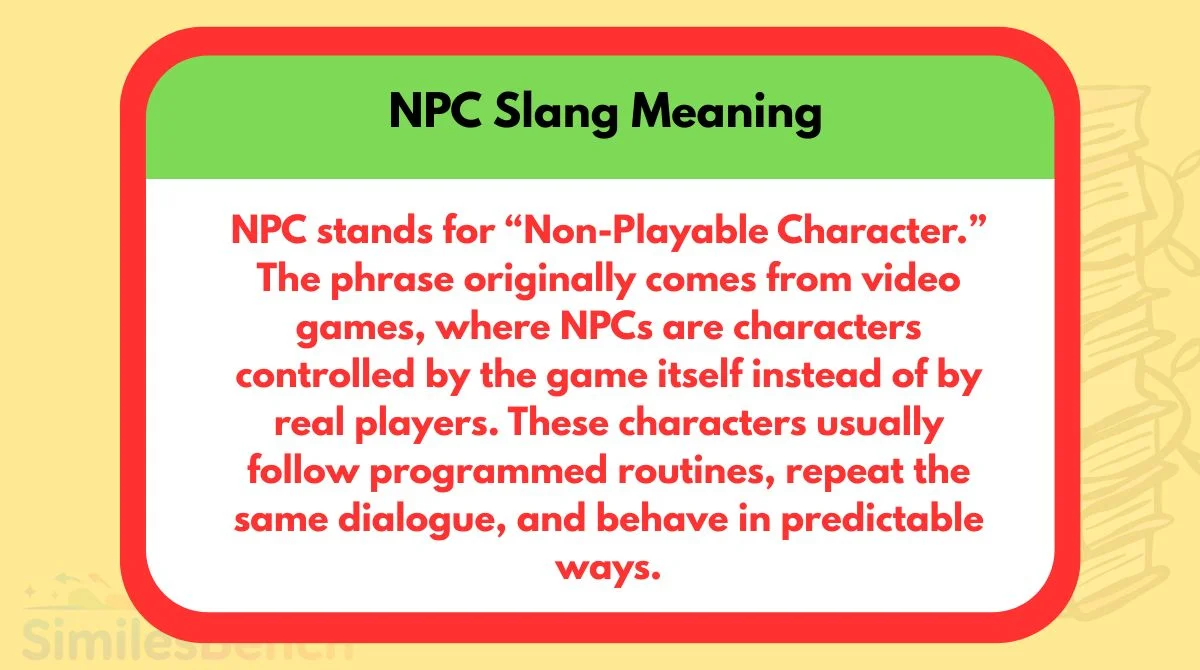
NPC stands for “Non-Playable Character.” The phrase originally comes from video games, where NPCs are characters controlled by the game itself instead of by real players. These characters usually follow programmed routines, repeat the same dialogue, and behave in predictable ways.
In internet slang, calling someone an NPC suggests that the person acts robotic, repetitive, or lacks original thought. It implies that someone simply follows popular opinions, trends, or social behaviors without thinking independently. For example, a person constantly repeating viral opinions from social media may be labeled an NPC online.
The slang version became especially popular through memes and short-form video content. People began joking about “NPC behavior” when someone acted overly predictable or seemed emotionally disconnected from conversations. On platforms like TikTok, creators even perform “NPC livestreams” where they imitate robotic game-like characters using repetitive phrases and motions.
However, the meaning can vary depending on tone and context. Sometimes the term is used lightly among friends as harmless teasing. Other times, it is used more aggressively to insult someone’s intelligence, personality, or individuality.
Because of this, NPC can carry both humorous and negative meanings. In casual internet culture, it often represents conformity or repetitive behavior. In more serious discussions, it may be considered dismissive or disrespectful.
The popularity of the phrase reflects how internet users compare real-life social behavior to video game mechanics. Since many people are familiar with gaming culture, the NPC concept became an easy metaphor for describing predictable human behavior online.
NPC Slang Meaning Background & History
The origin of NPC dates back decades to role-playing video games and tabletop gaming systems. In these games, NPCs were background characters created by game developers or dungeon masters to help move the story forward. Shopkeepers, guards, villagers, and quest givers are classic examples of NPCs in games.
As gaming culture expanded into mainstream entertainment, gaming terminology slowly entered internet conversations. Around the late 2010s, NPC became a widely recognized meme on forums and social media websites. Internet users started using the term metaphorically to describe people who seemed repetitive or incapable of independent thinking.
One major reason for the slang’s growth was meme culture. Online images and videos portrayed NPCs as expressionless gray-faced characters repeating scripted dialogue. These memes spread rapidly because many internet users related the joke to repetitive social media behavior.
The term became even more popular during political and cultural debates online. Some users applied NPC slang to people they believed blindly followed mainstream opinions. This usage created controversy because critics argued the term could dehumanize people by implying they lacked intelligence or personal agency.
Later, TikTok transformed the meaning again through viral livestream trends. Creators acted like video game NPCs by repeating phrases whenever viewers sent virtual gifts. These performances introduced NPC slang to younger audiences who may not even play video games.
Today, NPC slang exists across many internet communities. Its meaning has evolved from a gaming term into a broader cultural expression used in humor, criticism, memes, and entertainment.
NPC Slang Meaning Usage in Various Contexts
NPC slang appears in many different online and offline situations. The meaning often changes slightly depending on the platform, audience, and tone of the conversation.
In gaming communities, NPC usually keeps its original meaning. Gamers refer to computer-controlled characters as NPCs during gameplay discussions. Here, the term is neutral and technical rather than insulting.
On social media platforms, NPC is commonly used humorously. Someone might comment “NPC behavior” when a person copies trends, repeats viral phrases, or acts predictably. Memes often exaggerate this behavior for comedic effect.
In political discussions, the term can become more controversial. Some people use NPC to criticize others they believe follow opinions without critical thinking. Because of this, the phrase may sound dismissive or insulting during debates.
On TikTok and livestreaming platforms, NPC culture became a form of entertainment. Streamers imitate robotic actions and repetitive speech patterns to resemble game characters. Viewers interact with creators by triggering repeated responses through digital gifts.
In friendships, the term may simply be playful teasing. Friends sometimes jokingly call each other NPCs for repeating routines or behaving predictably in daily life. Tone matters greatly in these situations.
In workplace or academic settings, however, using NPC slang is generally inappropriate. Since the term can imply someone lacks intelligence or originality, it may sound disrespectful or unprofessional.
The flexibility of NPC slang is one reason for its popularity. It can function as a joke, insult, meme, cultural reference, or entertainment style depending on context. Still, users should remain aware that not everyone interprets the term positively.
NPC Slang Meaning Common Misconceptions & Clarifications
Many people misunderstand NPC slang because they only encounter it through memes or viral videos. One common misconception is that NPC always means someone is unintelligent. While the term can be used as an insult, it more commonly refers to predictable or repetitive behavior rather than actual intelligence.
Another misunderstanding is that NPC slang only exists in gaming culture. Although the term originated from video games, it is now widely used across social media, dating apps, online forums, and internet humor communities.
Some people also believe NPC is always offensive. In reality, the tone depends heavily on context. Friends may jokingly use it harmlessly, while strangers in online arguments may use it aggressively. The intent behind the word matters significantly.
A further misconception is that NPC slang describes introverted or quiet people. That is not necessarily true. The term is more connected to repetitive behavior, scripted responses, or trend-following than personality type.
People also confuse NPC with being fake or emotionless. While memes sometimes portray NPCs as robotic, real-world usage usually focuses more on conformity than emotional expression.
Additionally, not every repetitive behavior makes someone an “NPC.” Internet slang often exaggerates ordinary habits for humor. Using the term too seriously can create unnecessary negativity.
Understanding these clarifications helps people interpret NPC slang more accurately. Since internet language evolves rapidly, meanings often become broader and more flexible over time.
NPC Slang Meaning Similar Terms & Alternatives
Several slang terms share similarities with NPC, although each has slightly different meanings and tones.
One common alternative is “sheep.” This term describes people who blindly follow others without independent thinking. Compared to NPC, sheep is often more directly insulting and politically charged.
Another similar term is “bot.” Online users call someone a bot when they behave automatically, repeat the same comments, or seem fake. Unlike NPC, bot sometimes suggests automated internet accounts rather than real people.
“Basic” is another related slang term. A basic person is seen as overly mainstream or predictable. However, basic usually focuses on trends, fashion, or lifestyle choices rather than robotic behavior.
The phrase “copy-paste personality” is also similar. It refers to people whose opinions, humor, or identity seem entirely based on internet trends and social media culture.
“Follower mentality” is a more formal alternative often used in psychology or social discussions. It describes individuals who adopt group opinions without questioning them.
NPC differs slightly from all these terms because it specifically references the idea of scripted behavior from video games. That gaming connection gives the slang its unique cultural identity and meme appeal.
How to Respond to This Term
If someone calls you an NPC online, the best response depends on the situation and tone.
In playful conversations among friends, laughing it off may be enough. Many people use the term casually without serious negative intent.
If the comment feels insulting, staying calm is usually the best approach. Responding aggressively can escalate unnecessary arguments. Sometimes ignoring the comment entirely is the smartest option.
You can also ask what the person specifically means. Since NPC slang is vague, clarification may reveal whether the comment was meant humorously or critically.
In professional or academic environments, maintaining respectful communication is important. Avoid using internet slang aggressively in serious discussions.
Some people respond humorously by intentionally acting robotic or repeating game-like phrases. This playful self-awareness can diffuse tension and turn the interaction into a joke.
Ultimately, context matters. Internet slang often relies heavily on tone, audience, and intent.
Regional or Cultural Differences
NPC slang is most common in English-speaking online communities, especially in countries with strong gaming and meme cultures such as the United States, Canada, and the United Kingdom.
However, social media has spread the term globally. Younger internet users in many countries now recognize NPC slang through TikTok, gaming videos, memes, and livestream culture.
Different cultures may interpret the phrase differently. In some online communities, NPC is mostly humorous entertainment slang. In others, it carries stronger political or insulting meanings.
Gaming familiarity also affects understanding. People who regularly play video games usually understand the original reference immediately, while non-gamers may only know the meme version.
Generational differences exist as well. Younger users tend to use NPC more casually in memes and jokes, while older audiences may find the term confusing or rude.
Because internet culture constantly evolves, regional meanings can continue changing over time.
Comparison with Similar Terms
Although NPC resembles terms like bot, sheep, and basic, important differences exist.
A bot usually refers to automated behavior or fake online accounts. NPC, however, refers more to predictable human behavior inspired by video game characters.
Sheep implies blind obedience or lack of independent thinking. NPC can include that idea but often emphasizes scripted or repetitive actions.
Basic describes mainstream tastes and trends, especially in fashion or lifestyle. NPC focuses more on personality patterns and robotic social behavior.
Unlike these terms, NPC strongly connects to gaming culture and meme humor. That connection gives it a unique internet identity that other slang terms lack.
Usage in Online Communities & Dating Apps
NPC slang appears frequently in online communities such as Reddit, TikTok, Discord, Twitch, and gaming forums. Meme creators use it for jokes about repetitive internet behavior, trend-following, or scripted conversations.
On TikTok, NPC livestreams became a major trend. Streamers imitate robotic game characters using repetitive catchphrases and exaggerated reactions. This style gained millions of views and introduced the term to mainstream audiences.
In dating apps, NPC may describe someone with a boring profile, repetitive conversation style, or lack of personality. Users sometimes joke that certain dating conversations feel “NPC-generated” because they sound scripted or generic.
However, using the term directly toward strangers on dating platforms can appear rude or dismissive. Humor online does not always translate well in personal interactions.
Online communities often adapt slang quickly, so NPC meaning continues evolving alongside internet culture.
Hidden or Offensive Meanings
Although NPC slang is often used humorously, it can become offensive depending on context and intent.
Calling someone an NPC may imply they lack intelligence, individuality, emotions, or critical thinking. In heated discussions, the term can feel dehumanizing because it compares real people to scripted game characters.
Some online groups use NPC insultingly during political arguments or social debates. Critics argue this usage discourages respectful conversation and reduces complex individuals to stereotypes.
Because of these negative possibilities, users should think carefully before using the term in serious conversations. Humor that seems harmless in one community may appear disrespectful in another.
Understanding both the playful and harmful sides of NPC slang helps people communicate more responsibly online.
Suitability for Professional Communication
NPC slang is generally unsuitable for professional communication. Workplaces, academic environments, and formal discussions usually require respectful and clear language.
Using internet slang like NPC in professional settings may appear immature, disrespectful, or unprofessional. Since the term can sound insulting, it could create misunderstandings or conflict among coworkers or clients.
In casual online communities, the phrase may be acceptable as humor. However, professional communication benefits from neutral and respectful wording instead of meme-based slang.
Choosing language carefully helps maintain professionalism and positive interactions.
FAQs
What does NPC mean in slang?
NPC means “Non-Playable Character.” It describes someone acting predictable or repetitive.
Is NPC an insult?
It can be. Sometimes it is playful humor, but it may also sound disrespectful.
Where did NPC slang come from?
The term originated from video games and later became popular through internet memes.
Why is NPC popular on TikTok?
TikTok creators made viral NPC livestreams using robotic speech and repetitive reactions.
Can NPC slang be offensive?
Yes. Some people feel the term unfairly compares humans to emotionless characters.
Is NPC slang appropriate at work?
No. It is generally considered too informal and potentially disrespectful for professional settings.
Conclusion
NPC slang meaning has evolved from a simple gaming term into a major part of internet culture. Originally describing computer-controlled video game characters, NPC now refers to predictable, repetitive, or trend-following behavior in online conversations and social media communities.
The term can be humorous, sarcastic, playful, or offensive depending on context. Its popularity across memes, TikTok livestreams, gaming culture, and dating apps shows how quickly internet language changes and spreads globally.
Understanding NPC slang helps people better navigate online communication and digital culture. Since meanings vary by tone and platform, using the term carefully and respectfully is important. Like many internet expressions, NPC reflects both humor and social commentary in modern online interaction.