Rain Similes has inspired writers, poets, and storytellers for centuries. Sometimes it falls gently, while at other times it crashes down with great force. Because of this, rain is perfect for creating colorful comparisons in writing.
A simile helps readers imagine something more clearly by comparing it to another thing using words like “as” or “like.” In this article, you’ll discover beautiful rain similes, learn what they mean, and see how they can make your stories, poems, and essays more vivid and memorable.
What Is a Simile?
A simile is a figure of speech that compares two different things using the words “like” or “as.”
Writers use similes to create clear pictures in the reader’s mind. As a result, descriptions become more interesting and easier to imagine.
Full List of Rain Similes
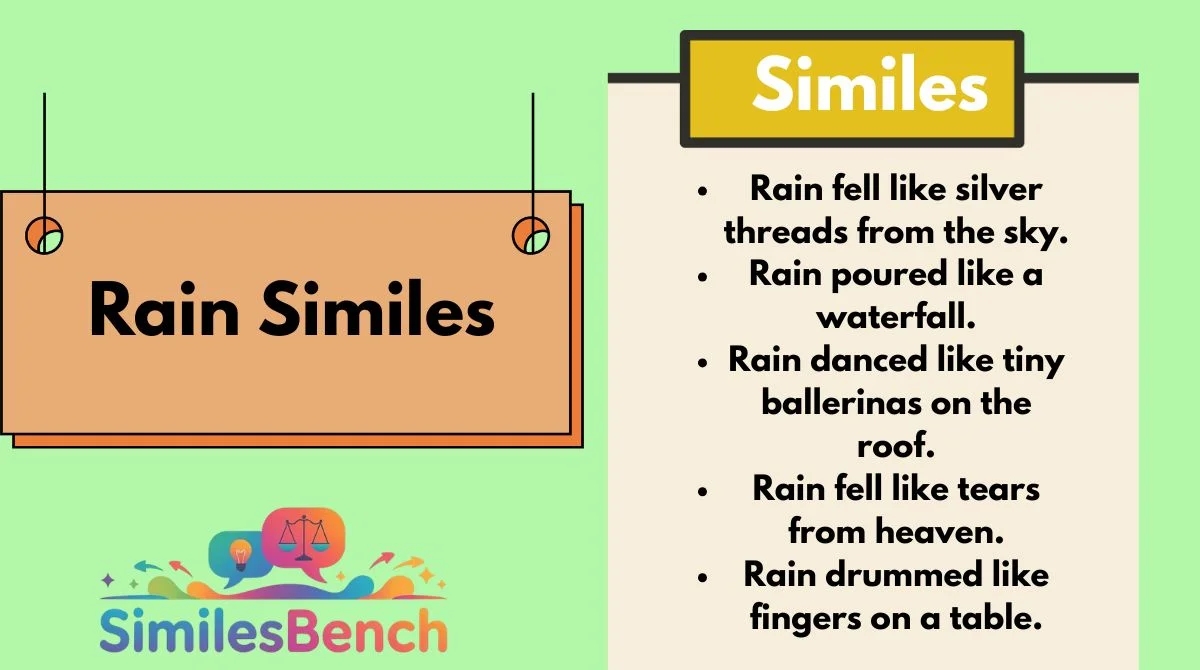
- Rain fell like silver threads from the sky.
- Rain poured like a waterfall.
- Rain danced like tiny ballerinas on the roof.
- Rain fell like tears from heaven.
- Rain drummed like fingers on a table.
- Rain sparkled like scattered diamonds.
- Rain rushed like a herd of wild horses.
- Rain fell as softly as feathers.
- Rain poured like buckets being emptied.
- Rain whispered like a secret in the wind.
- Rain hit the ground like popping popcorn.
- Rain flowed like a river across the streets.
1. Rain fell like silver threads from the sky
Meaning: The rain looks thin, shiny, and beautiful.
Explanation: This simile creates a delicate image of rain falling in long sparkling lines.
Examples:
- The evening rain fell like silver threads from the sky, glowing in the streetlights.
- As the sun disappeared, rain drifted down like silver threads across the valley.
2. Rain poured like a waterfall
Meaning: The rain is very heavy and powerful.
Explanation: It compares strong rain to the force of a waterfall.
Examples:
- Rain poured like a waterfall during the afternoon storm.
- We hurried indoors because the rain was pouring like a waterfall.
3. Rain danced like tiny ballerinas on the roof
Meaning: The raindrops move lightly and gracefully.
Explanation: This simile makes rain seem playful and elegant.
Examples:
- Throughout the night, rain danced like tiny ballerinas on the roof.
- The children listened quietly as rain danced like ballerinas above them.
4. Rain fell like tears from heaven
Meaning: The rain feels emotional or sad.
Explanation: Writers often use this comparison in emotional scenes.
Examples:
- Rain fell like tears from heaven during the farewell ceremony.
- The lonely road seemed even sadder as rain fell like tears from heaven.
5. Rain drummed like fingers on a table
Meaning: The rain makes a steady tapping sound.
Explanation: It focuses on the rhythm and sound of rainfall.
Examples:
- Rain drummed like fingers on a table against the window.
- Meanwhile, the storm grew stronger and rain drummed across the roof.
6. Rain sparkled like scattered diamonds
Meaning: The raindrops shine brightly.
Explanation: This simile highlights the beauty of rain in sunlight.
Examples:
- After the storm, rain sparkled like scattered diamonds on the grass.
- The garden looked magical as rain sparkled like tiny diamonds.
7. Rain rushed like a herd of wild horses
Meaning: The rain moves quickly and forcefully.
Explanation: It creates a sense of energy and power.
Examples:
- Suddenly, rain rushed like a herd of wild horses across the fields.
- The dark clouds arrived, and rain rushed toward us like wild horses.
8. Rain fell as softly as feathers
Meaning: The rain is very light and gentle.
Explanation: This comparison creates a peaceful feeling.
Examples:
- Rain fell as softly as feathers on the quiet lake.
- Early in the morning, rain touched the flowers as softly as feathers.
9. Rain poured like buckets being emptied
Meaning: Extremely heavy rain.
Explanation: People often use this simile in everyday conversations.
Examples:
- Rain poured like buckets being emptied during the thunderstorm.
- We canceled the picnic because rain was pouring like buckets.
10. Rain whispered like a secret in the wind
Meaning: The rain sounds soft and quiet.
Explanation: This simile creates a calm and mysterious mood.
Examples:
- Outside the cabin, rain whispered like a secret in the wind.
- The forest felt peaceful while rain whispered through the trees.
11. Rain hit the ground like popping popcorn
Meaning: Raindrops fall quickly and make small popping sounds.
Explanation: This comparison adds energy and fun to a description.
Examples:
- Rain hit the pavement like popping popcorn during the sudden shower.
- The children laughed as rain bounced like popcorn on the sidewalk.
12. Rain Similes flowed like a river across the streets
Meaning: There is so much rain that water moves like a stream.
Explanation: It emphasizes the amount of rainfall.
Examples:
- After hours of rain, water flowed like a river across the streets.
- Cars moved slowly because rain flowed through the roads like a river.
Creative Writing Tips
Using rain similes can instantly improve your writing. However, choosing the right simile matters.
In Stories
Use rain similes to create mood and emotion. For instance, “rain fell like tears from heaven” works well in sad scenes. On the other hand, “rain danced like tiny ballerinas” creates a cheerful atmosphere.
In Poems
Poetry often relies on imagery. Therefore, similes can help readers see and feel the scene more clearly. Try comparing rain to objects, sounds, or emotions.
In Essays
Descriptive essays become more engaging when you add similes. Instead of simply saying it rained heavily, describe how the rain “poured like a waterfall.”
In Songs
Songwriters frequently use similes because they make lyrics memorable. Furthermore, comparisons help listeners connect emotionally with the message.
Helpful Tips for Students and Writers
- Use similes naturally rather than forcing them into every sentence.
- Match the simile to the mood of your writing.
- Read your sentence aloud to check whether it sounds smooth.
- Create your own comparisons based on personal experiences.
- Keep descriptions simple and easy to understand.
As a result, your writing will feel more vivid and original.
FAQs
What is a rain simile?
A rain simile compares rain to something else using the words “like” or “as” to create a clearer image.
Why do writers use rain similes?
Writers use rain similes to make descriptions more interesting, emotional, and memorable.
Can students use similes in school essays?
Yes. Similes make essays more descriptive and help readers imagine the scene better.
What are the most common rain similes?
Some common examples include “rain poured like a waterfall” and “rain fell as softly as feathers.”
How can I create my own rain simile?
Think about how rain looks, sounds, or feels. Then compare it to something familiar using “like” or “as.”
Conclusion
Rain similes are simple tools that can make writing more colorful and expressive. Whether you’re working on a story, poem, essay, or song, these comparisons help readers see and feel your descriptions more clearly.
Furthermore, they add emotion and creativity without making writing complicated. Start using these rain similes today, and you’ll soon notice your writing becoming richer, stronger, and more engaging.