Similes for Awkward Have you ever felt uncomfortable in a situation and struggled to describe it? That’s where similes can help. Similes make writing more colorful by comparing one thing to another using words like “as” or “like.”
When describing awkward moments, a good simile can instantly help readers picture the feeling. Whether you’re writing a story, poem, essay, or social media post, these similes for awkward can make your words more vivid and memorable.
What Is a Simile?
A simile is a figure of speech that compares two different things using the words “like” or “as.”
It helps readers understand feelings, actions, or situations by connecting them to something familiar.
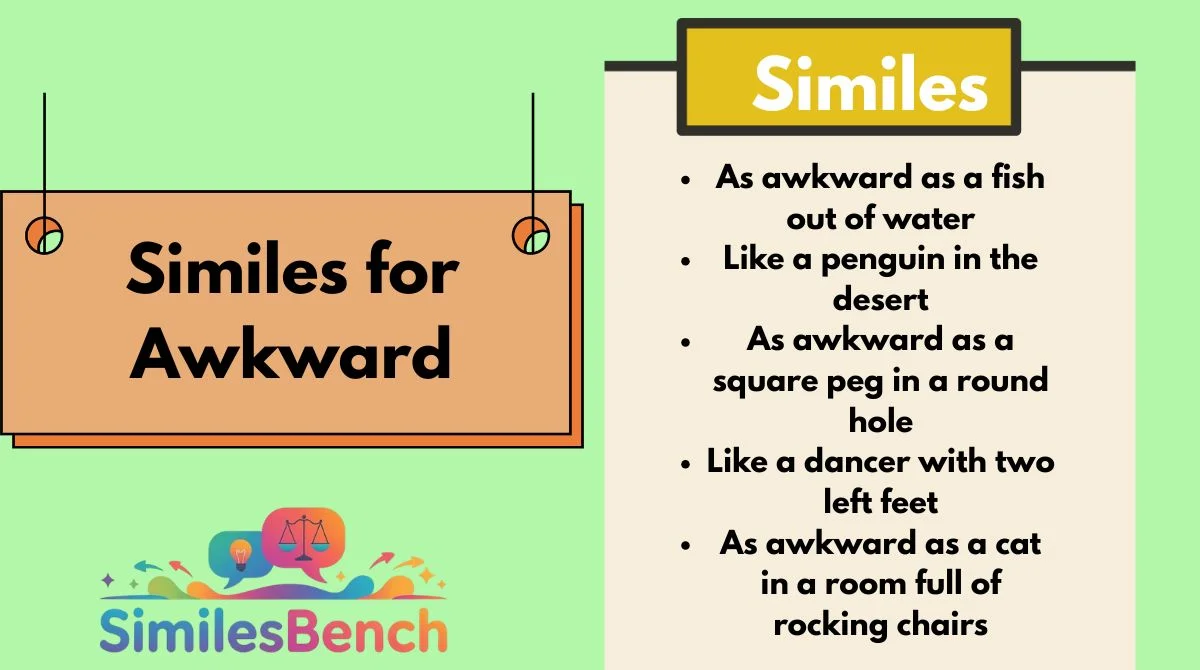
Full List of Similes for Awkward
- As awkward as a fish out of water
- Like a penguin in the desert
- As awkward as a square peg in a round hole
- Like a dancer with two left feet
- As awkward as a cat in a room full of rocking chairs
- Like a clown at a funeral
- As awkward as wearing shoes on the wrong feet
- Like a giraffe in a tiny elevator
- As awkward as silence after a bad joke
- Like a duck trying to climb a tree
- As awkward as a newcomer at a family reunion
- Like a robot learning to dance
- As awkward as a spilled drink at a formal dinner
1. As awkward as a fish out of water
Meaning: Feeling uncomfortable in an unfamiliar place.
Explanation: This simile describes someone who does not fit into a situation.
Examples:
- During her first day at the new school, Mia felt as awkward as a fish out of water.
- I was as awkward as a fish out of water when everyone started discussing a topic I knew nothing about.
2. Like a penguin in the desert
Meaning: Completely out of place.
Explanation: Penguins belong in cold environments, not hot deserts.
Examples:
- Wearing a heavy winter coat at the beach made him feel like a penguin in the desert.
- She looked like a penguin in the desert at the fashion event because everyone else was dressed differently.
3. As awkward as a square peg in a round hole
Meaning: Not fitting in.
Explanation: A square peg cannot easily fit into a round hole.
Examples:
- Although he tried to join the conversation, he felt as awkward as a square peg in a round hole.
- The old furniture looked as awkward as a square peg in a round hole inside the modern apartment.
4. Like a dancer with two left feet
Meaning: Clumsy and uncoordinated.
Explanation: This simile is often used when someone struggles with movement.
Examples:
- At the wedding reception, I moved like a dancer with two left feet.
- He looked like a dancer with two left feet during the talent show.
5. As awkward as a cat in a room full of rocking chairs
Meaning: Nervous and uncomfortable.
Explanation: The image creates a sense of uncertainty and caution.
Examples:
- While giving her speech, she felt as awkward as a cat in a room full of rocking chairs.
- He sat as awkward as a cat in a room full of rocking chairs during the interview.
6. Like a clown at a funeral
Meaning: Inappropriate for the situation.
Explanation: The person’s presence feels strange or uncomfortable.
Examples:
- His loud jokes felt like a clown at a funeral during the serious meeting.
- I stood there like a clown at a funeral when everyone else was quiet.
7. As awkward as wearing shoes on the wrong feet
Meaning: Feeling strange and uncomfortable.
Explanation: The comparison highlights discomfort and uneasiness.
Examples:
- The unfamiliar uniform felt as awkward as wearing shoes on the wrong feet.
- After the misunderstanding, the conversation became as awkward as wearing shoes on the wrong feet.
8. Like a giraffe in a tiny elevator
Meaning: Looking uncomfortable in a small space.
Explanation: The image creates a funny picture of someone who does not fit well.
Examples:
- Because he was so tall, he looked like a giraffe in a tiny elevator.
- Sitting in the crowded car made me feel like a giraffe in a tiny elevator.
9. As awkward as silence after a bad joke
Meaning: Deeply uncomfortable and embarrassing.
Explanation: Almost everyone can relate to this feeling.
Examples:
- The room became as awkward as silence after a bad joke.
- After nobody laughed, he felt as awkward as silence after a bad joke.
10. Like a duck trying to climb a tree
Meaning: Attempting something unsuited to one’s abilities.
Explanation: Ducks are not built for climbing trees.
Examples:
- I felt like a duck trying to climb a tree during the advanced coding class.
- He looked like a duck trying to climb a tree while using the complicated machine.
11. As awkward as a newcomer at a family reunion
Meaning: Feeling left out or unfamiliar.
Explanation: Everyone else already knows one another.
Examples:
- During the community gathering, I felt as awkward as a newcomer at a family reunion.
- She stood quietly, as awkward as a newcomer at a family reunion.
12. Like a robot learning to dance
Meaning: Stiff, unnatural, or clumsy.
Explanation: Movements seem forced and uncomfortable.
Examples:
- He moved like a robot learning to dance during the performance.
- Because she was nervous, she walked like a robot learning to dance.
13. As awkward as a spilled drink at a formal dinner
Meaning: Suddenly embarrassing and uncomfortable.
Explanation: Everyone notices the mistake, which increases the tension.
Examples:
- The unexpected comment landed as awkward as a spilled drink at a formal dinner.
- I felt as awkward as a spilled drink at a formal dinner after calling my teacher by the wrong name.
Creative Writing Tips
Similes can make ordinary writing feel alive. However, they work best when used naturally.
Using Similes in Stories
Stories become more engaging when readers can picture emotions clearly.
For instance, instead of writing “Jake felt uncomfortable,” you could write, “Jake felt as awkward as a fish out of water.” As a result, readers immediately understand his feelings.
Using Similes in Poems
Poetry often depends on strong imagery.
Therefore, similes can help create emotion and rhythm. Choose comparisons that match the mood of your poem.
Using Similes in Essays
Essays should remain clear and easy to understand.
However, a well-placed simile can make an example more memorable. Use them sparingly so they strengthen your point rather than distract from it.
Using Similes in Songs
Songs rely on emotion and imagination.
Because of this, similes can make lyrics more relatable. They help listeners connect with feelings and experiences more deeply.
Practical Tips for Students and Writers
- Choose comparisons your readers will understand.
- Keep similes short and clear.
- Avoid mixing too many similes in one paragraph.
- Match the simile to the emotion you want to show.
- Furthermore, read your writing aloud to check whether it sounds natural.
- Finally, create your own similes for a unique writing style.
FAQs
What are similes used for?
Similes help readers visualize ideas, emotions, and situations more clearly. They make writing more interesting and expressive.
What is the most common simile for awkward?
“As awkward as a fish out of water” is one of the most common and widely understood similes for awkward situations.
Can students use similes in school essays?
Yes. Similes can improve descriptive writing when used appropriately and in moderation.
What is the difference between a simile and a metaphor?
A simile uses words like “as” or “like” to compare things. A metaphor makes a direct comparison without using those words.
How can I create my own similes?
Think about the feeling you want to describe. Then compare it to something familiar that creates the same image or emotion.
Conclusion
Similes are powerful tools that bring writing to life. They help readers understand emotions, situations, and experiences through vivid comparisons.
Whether you’re crafting a story, poem, essay, or song, these similes for awkward can make your writing more engaging and memorable. Start using them in your work today, and you’ll quickly notice how much more colorful and expressive your writing becomes.