Similes for Unfortunate Have you ever wanted to describe bad luck in a more colorful way? Instead of simply saying someone was unfortunate, you can use a simile to paint a clearer picture in your reader’s mind.
Similes make writing more vivid, emotional, and memorable. They help readers feel what a character is experiencing rather than just reading about it. Whether you’re writing a story, poem, essay, or song, learning similes for unfortunate situations can make your writing stronger and more expressive.
What Is a Simile?
A simile is a figure of speech that compares two different things using the words like or as.
It helps readers imagine a feeling, situation, or person more clearly. For example, “as busy as a bee” creates a stronger image than simply saying someone is busy.
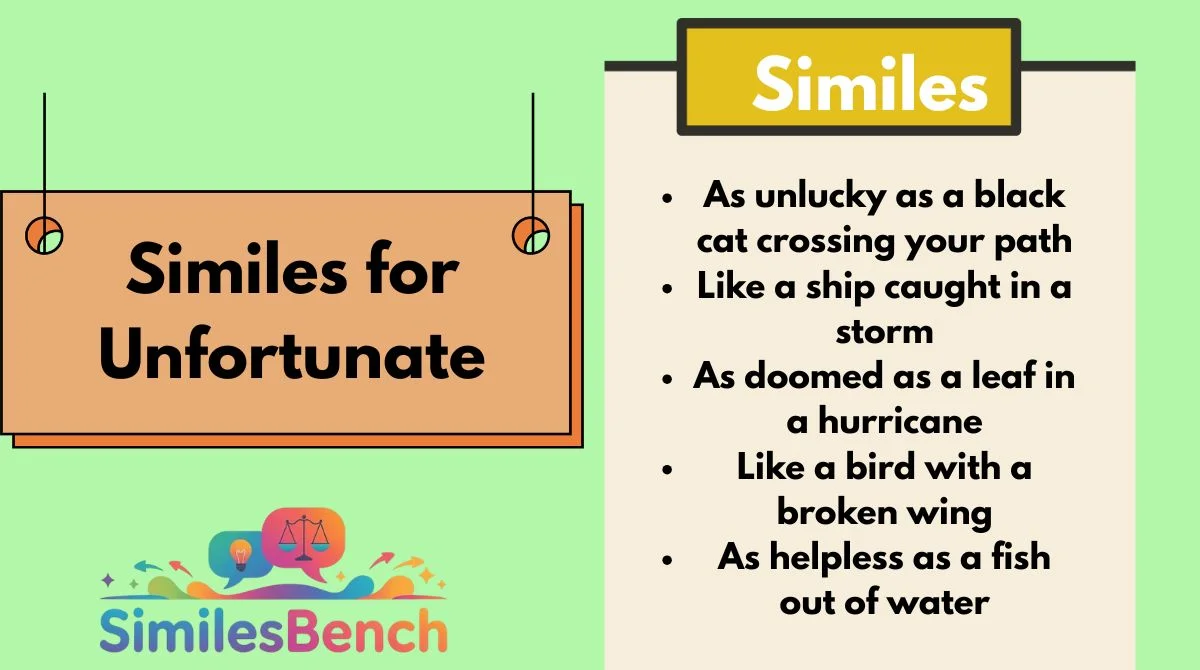
Full List of Similes for Unfortunate
- As unlucky as a black cat crossing your path
- Like a ship caught in a storm
- As doomed as a leaf in a hurricane
- Like a bird with a broken wing
- As helpless as a fish out of water
- Like a candle in the wind
- As miserable as a rainy picnic
- Like a traveler lost in the desert
- As unfortunate as a fallen star
- Like a flower crushed underfoot
- As unlucky as rolling snake eyes
- Like a boat without a paddle
1. As unlucky as a black cat crossing your path
Meaning: Extremely unlucky.
Explanation: This simile comes from old superstitions about bad luck.
Examples:
- Jake felt as unlucky as a black cat crossing your path when he missed the final bus home.
- She was as unlucky as a black cat crossing your path after losing her phone and wallet on the same day.
2. Like a ship caught in a storm
Meaning: Facing serious trouble or difficulties.
Explanation: It describes someone struggling through challenging circumstances.
Examples:
- After the company closed, he felt like a ship caught in a storm.
- The family seemed like a ship caught in a storm when unexpected bills arrived.
3. As doomed as a leaf in a hurricane
Meaning: Having little or no chance of success.
Explanation: A leaf cannot survive a hurricane, so the comparison shows hopeless odds.
Examples:
- Without proper preparation, the team looked as doomed as a leaf in a hurricane.
- His old bicycle was as doomed as a leaf in a hurricane during the heavy flood.
4. Like a bird with a broken wing
Meaning: Unable to move forward or achieve goals easily.
Explanation: A bird with a broken wing cannot fly freely.
Examples:
- After the injury, the athlete felt like a bird with a broken wing.
- She seemed like a bird with a broken wing when her confidence disappeared.
5. As helpless as a fish out of water
Meaning: Completely unable to deal with a situation.
Explanation: Fish need water to survive, so they struggle outside it.
Examples:
- During the advanced math exam, I felt as helpless as a fish out of water.
- He looked as helpless as a fish out of water while trying to fix the computer.
6. Like a candle in the wind
Meaning: Weak, vulnerable, or easily affected by problems.
Explanation: A candle flame can go out quickly when exposed to wind.
Examples:
- Her hopes felt like a candle in the wind after hearing the disappointing news.
- The small business was like a candle in the wind during the economic crisis.
7. As miserable as a rainy picnic
Meaning: Very unhappy or disappointed.
Explanation: Picnics are meant to be enjoyable, yet rain can ruin them.
Examples:
- The children were as miserable as a rainy picnic when the trip was canceled.
- He felt as miserable as a rainy picnic after failing the audition.
8. Like a traveler lost in the desert
Meaning: Confused, hopeless, or without direction.
Explanation: A lost traveler may struggle to find safety or help.
Examples:
- Without guidance, she felt like a traveler lost in the desert.
- The new employee looked like a traveler lost in the desert on his first day.
9. As unfortunate as a fallen star
Meaning: Experiencing a sudden downfall or loss.
Explanation: A fallen star symbolizes lost greatness or missed opportunities.
Examples:
- The once-famous actor seemed as unfortunate as a fallen star.
- His career became as unfortunate as a fallen star after the scandal.
10. Like a flower crushed underfoot
Meaning: Hurt, defeated, or treated unfairly.
Explanation: A crushed flower loses its beauty and strength.
Examples:
- She felt like a flower crushed underfoot after being ignored by her friends.
- The young artist looked like a flower crushed underfoot when his work was mocked.
11. As unlucky as rolling snake eyes
Meaning: Experiencing extremely bad luck.
Explanation: In many games, rolling snake eyes often brings poor results.
Examples:
- He was as unlucky as rolling snake eyes during the tournament.
- The project felt as unlucky as rolling snake eyes from the very beginning.
12. Like a boat without a paddle
Meaning: Having no control over a difficult situation.
Explanation: A boat without a paddle cannot easily choose its direction.
Examples:
- After losing her job, she felt like a boat without a paddle.
- The team looked like a boat without a paddle once their captain left.
Creative Writing Tips
Similes can transform ordinary writing into something readers remember. However, using them wisely is important.
Using Similes in Stories
Stories become more engaging when readers can picture emotions clearly.
For instance, instead of writing “He was unlucky,” write “He was as unlucky as rolling snake eyes.” The second version creates a stronger image.
Furthermore, try matching the simile to the mood of the scene. A sad moment should use a simile that supports that emotion.
Using Similes in Poems
Poetry relies heavily on imagery.
Therefore, similes can help create beautiful and emotional lines. Choose comparisons that spark imagination and make readers feel something.
Moreover, avoid using too many similes in one poem. A few strong ones often work best.
Using Similes in Essays
Essays can also benefit from similes when used carefully.
For example, a descriptive essay becomes more interesting when comparisons help explain ideas. However, keep them relevant and easy to understand.
Using Similes in Songs
Many songwriters use similes to express feelings.
Because music connects with emotions, a creative comparison can make lyrics more memorable. Try comparing sadness, hope, or disappointment to familiar situations.
Practical Tips for Better Similes
- Choose comparisons your readers can easily understand.
- Make sure the simile fits the situation.
- Use fresh and original images whenever possible.
- Read your sentence aloud to check if it sounds natural.
- Focus on emotion as well as description.
FAQs
What is a simile?
A simile is a comparison between two different things using the words like or as. It helps create vivid images in writing.
Why do writers use similes?
Writers use similes to make descriptions more interesting, emotional, and memorable for readers.
Can similes describe bad luck?
Yes. Many similes are perfect for showing bad luck, disappointment, sadness, or unfortunate situations.
What is the difference between a simile and a metaphor?
A simile uses like or as to compare things. A metaphor makes a direct comparison without those words.
How can students improve their use of similes?
Students can improve by reading regularly, noticing comparisons in books, and practicing their own creative examples.
Conclusion
Similes are powerful tools that bring writing to life. They help readers understand emotions, situations, and experiences through vivid comparisons. The similes in this guide can make descriptions of unfortunate events more expressive and memorable.
Furthermore, they can strengthen stories, poems, essays, and songs. Keep practicing, experiment with your own comparisons, and soon you’ll be using similes naturally and confidently in your writing.