Similes for Loneliness is a feeling almost everyone experiences at some point. Sometimes it arrives quietly, while other times it feels overwhelming. Because emotions can be difficult to explain, writers often use similes to make feelings easier to understand.
A simile compares one thing to another using the words “like” or “as.” As a result, readers can picture emotions more clearly. Whether you are writing a story, poem, essay, or song, learning similes for loneliness can help you express feelings in a deeper and more creative way. So, let’s explore some powerful examples that bring this emotion to life.
What Is a Simile?
A simile is a figure of speech that compares two different things using the words “like” or “as.”
For example, saying “as busy as a bee” helps readers quickly imagine someone who is very active. Similarly, similes for loneliness help describe emotional feelings through vivid images.
Full List of Similes for Loneliness
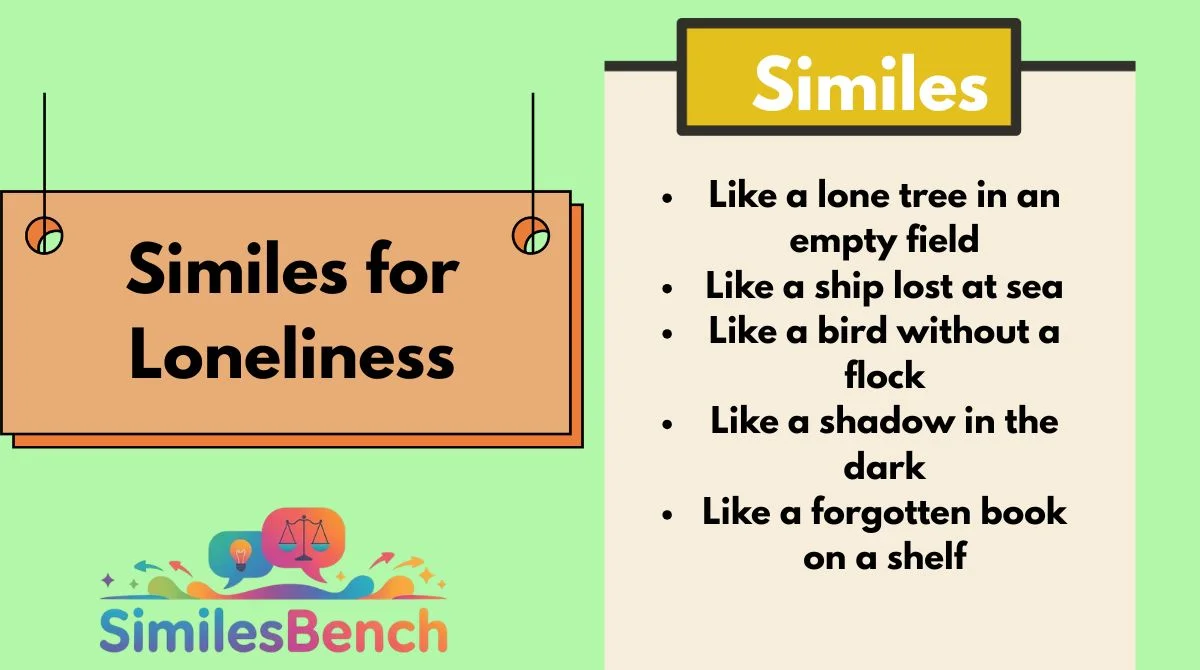
- Like a lone tree in an empty field
- Like a ship lost at sea
- Like a bird without a flock
- Like a shadow in the dark
- Like a forgotten book on a shelf
- Like a star in a cloudy sky
- Like an empty bench in a park
- Like a leaf drifting in the wind
- Like a candle burning alone
- Like a traveler without a map
- Like an island in the ocean
- Like a single note in silence
- Like a house with no lights on
- Like a flower blooming in the desert
1. Like a lone tree in an empty field
Meaning: Feeling isolated and separated from others.
Explanation: Just as a single tree stands by itself, a lonely person may feel disconnected from everyone around them.
Examples:
- After moving to a new city, Mia felt like a lone tree in an empty field.
- He sat quietly at the party, feeling like a lone tree surrounded by strangers.
2. Like a ship lost at sea
Meaning: Feeling directionless and alone.
Explanation: A ship without guidance can drift endlessly. Likewise, loneliness can make people feel lost.
Examples:
- Without her best friend nearby, she felt like a ship lost at sea.
- During the difficult months after graduation, he wandered through life like a ship lost at sea.
3. Like a bird without a flock
Meaning: Feeling left out or separated from a group.
Explanation: Birds often travel together. Therefore, one bird alone can symbolize loneliness.
Examples:
- On the first day of school, I felt like a bird without a flock.
- She watched her friends laughing together and felt like a bird without a flock.
4. Like a shadow in the dark
Meaning: Feeling unnoticed or invisible.
Explanation: Shadows disappear in darkness. In the same way, lonely people may feel unseen.
Examples:
- He walked through the crowded hallway like a shadow in the dark.
- Even among relatives, she felt like a shadow in the dark.
5. Like a forgotten book on a shelf
Meaning: Feeling ignored or neglected.
Explanation: A forgotten book gathers dust because nobody pays attention to it.
Examples:
- After retirement, he sometimes felt like a forgotten book on a shelf.
- She stayed quiet during the meeting, feeling like a forgotten book no one wanted to open.
6. Like a star in a cloudy sky
Meaning: Feeling distant and disconnected.
Explanation: Although a star exists, thick clouds hide it from view.
Examples:
- Living far from home made him feel like a star in a cloudy sky.
- She seemed cheerful outside but felt like a star in a cloudy sky inside.
7. Like an empty bench in a park
Meaning: Feeling abandoned or unused.
Explanation: An empty bench often represents silence and absence.
Examples:
- Since her children moved away, she felt like an empty bench in a park.
- He spent weekends alone, feeling like an empty bench waiting for company.
8. Like a leaf drifting in the wind
Meaning: Feeling uncertain and alone.
Explanation: A drifting leaf has no control over where it goes.
Examples:
- After losing his job, he felt like a leaf drifting in the wind.
- She moved from place to place like a leaf drifting in the wind.
9. Like a candle burning alone
Meaning: Feeling isolated but still hopeful.
Explanation: A candle shines even when it stands by itself.
Examples:
- Although she felt lonely, she remained like a candle burning alone.
- He waited patiently, like a candle burning alone in the night.
10. Like a traveler without a map
Meaning: Feeling confused and unsupported.
Explanation: A traveler without guidance can easily feel lost.
Examples:
- Starting college felt like being a traveler without a map.
- After the sudden change, she felt like a traveler without a map.
11. Like an island in the ocean
Meaning: Feeling completely separated from others.
Explanation: Islands are surrounded by water and often stand alone.
Examples:
- During quarantine, many people felt like islands in the ocean.
- He stayed distant from everyone, feeling like an island in the ocean.
12. Like a single note in silence
Meaning: Feeling alone in a quiet environment.
Explanation: One note by itself can sound isolated and fragile.
Examples:
- Her voice sounded like a single note in silence.
- He sat in the empty classroom like a single note in silence.
13. Like a house with no lights on
Meaning: Feeling empty and disconnected.
Explanation: A dark house often suggests absence and loneliness.
Examples:
- After her family left, the home felt like a house with no lights on.
- He described his heart as a house with no lights on.
14. Like a flower blooming in the desert
Meaning: Feeling alone but remaining strong.
Explanation: A flower growing in a harsh place survives despite isolation.
Examples:
- She faced every challenge like a flower blooming in the desert.
- Even when he felt lonely, he stood tall like a flower blooming in the desert.
Creative Writing Tips
Similes can make writing more emotional and memorable. However, they work best when used naturally.
Using Similes in Stories
Show a character’s feelings instead of simply saying they are lonely.
For instance, write:
“He felt like a ship lost at sea.”
This creates a stronger image than simply saying he was lonely.
Using Similes in Poems
Poetry often relies on imagery. Therefore, similes can help readers feel emotions more deeply.
Try comparing loneliness to objects in nature, such as stars, leaves, or islands.
Using Similes in Essays
Essays become more engaging when examples are vivid.
However, avoid using too many similes. One or two strong comparisons are usually enough.
Using Similes in Songs
Songwriters frequently use similes because they create emotion quickly.
For example, a line such as “I’m like a candle burning alone” can instantly connect with listeners.
Practical Tips for Better Similes
- Choose images people can easily imagine.
- Match the simile to the mood of your writing.
- Keep comparisons simple and meaningful.
- Read your sentence aloud to check if it sounds natural.
- Furthermore, try creating your own original comparisons for a unique voice.
FAQs
What is a simile for loneliness?
A simile for loneliness compares the feeling of being alone to something else using “like” or “as.” For example, “like an island in the ocean.”
Why do writers use similes?
Writers use similes because they create vivid images and help readers understand emotions more clearly.
Can similes make writing better?
Yes. Similes add color, emotion, and creativity to stories, poems, essays, and songs.
What is the difference between a simile and a metaphor?
A simile uses words such as “like” or “as.” A metaphor makes a direct comparison without those words.
How can students learn to write good similes?
Students can observe everyday objects, nature, and emotions. Then, they can connect those observations to the feeling they want to describe.
Conclusion
Similes are powerful tools that help writers express emotions in a vivid and memorable way. In particular, similes for loneliness can turn a simple feeling into a clear image that readers understand and connect with.
Whether you are writing a story, poem, essay, or song, these comparisons can add depth and emotion to your work. Keep practicing, stay creative, and soon creating meaningful similes will become second nature.