Similes for Scary moments can make stories exciting, poems emotional, and descriptions unforgettable. That is why writers often use similes to compare fear to something familiar and vivid.
A simile helps readers picture a feeling or scene more clearly. Instead of simply saying something was scary, you can create a stronger image in the reader’s mind. As a result, your writing becomes more interesting and expressive.
In this article, you will discover 12 powerful similes for scary, learn their meanings, and see practical examples. Whether you are a student, teacher, or creative writer, these similes can help bring your writing to life.
What Is a Simile?
A simile is a figure of speech that compares two different things using the words “like” or “as.”
It helps readers imagine feelings, actions, or situations more clearly. Therefore, similes make writing more colorful and engaging.
Full List of Similes
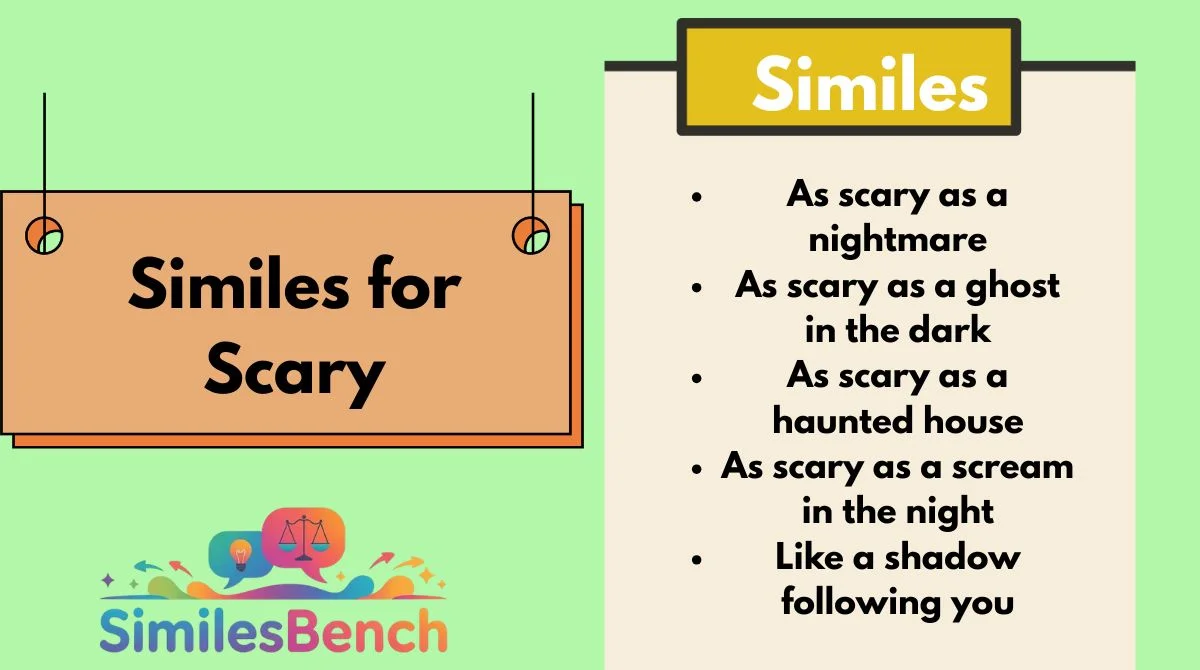
- As scary as a nightmare
- As scary as a ghost in the dark
- As scary as a haunted house
- As scary as a scream in the night
- Like a shadow following you
- As scary as a monster under the bed
- Like thunder crashing overhead
- As scary as a horror movie scene
- Like walking through a dark forest alone
- As scary as glowing eyes in the darkness
- Like being trapped in a storm
- As scary as hearing footsteps behind you
1. As scary as a nightmare
Meaning: Extremely frightening.
Explanation: This simile compares fear to a nightmare that feels real and unsettling.
Examples:
- The strange figure at the window was as scary as a nightmare.
- For a moment, the loud crash sounded as scary as a nightmare.
2. As scary as a ghost in the dark
Meaning: Very creepy and mysterious.
Explanation: Ghosts are often linked with fear, especially in dark places.
Examples:
- The empty hallway felt as scary as a ghost in the dark.
- Her sudden whisper was as scary as a ghost in the dark.
3. As scary as a haunted house
Meaning: Full of fear and suspense.
Explanation: Haunted houses are known for strange sounds and spooky surprises.
Examples:
- The abandoned building looked as scary as a haunted house.
- During the storm, the old cabin seemed as scary as a haunted house.
4. As scary as a scream in the night
Meaning: Shockingly frightening.
Explanation: Unexpected sounds in darkness can instantly create fear.
Examples:
- The alarm was as scary as a scream in the night.
- Suddenly, a loud cry echoed through the woods and felt as scary as a scream in the night.
5. Like a shadow following you
Meaning: Fear that stays close and never leaves.
Explanation: A shadow follows wherever you go, making this simile perfect for lingering fear.
Examples:
- The memory followed him like a shadow following you.
- Anxiety stayed with her like a shadow following you all day.
6. As scary as a monster under the bed
Meaning: Terrifying, especially to children.
Explanation: Many children imagine monsters hiding under their beds.
Examples:
- The strange noise sounded as scary as a monster under the bed.
- To the little boy, the dark corner seemed as scary as a monster under the bed.
7. Like thunder crashing overhead
Meaning: Sudden and overwhelming fear.
Explanation: Thunder can arrive without warning and startle anyone.
Examples:
- The unexpected news hit her like thunder crashing overhead.
- His angry shout came like thunder crashing overhead.
8. As scary as a horror movie scene
Meaning: Intensely frightening.
Explanation: Horror movies often contain suspenseful and shocking moments.
Examples:
- The deserted hospital looked as scary as a horror movie scene.
- The flickering lights made the room feel as scary as a horror movie scene.
9. Like walking through a dark forest alone
Meaning: Feeling nervous, vulnerable, or unsafe.
Explanation: Being alone in a dark forest can make people feel uneasy.
Examples:
- Entering the unfamiliar neighborhood felt like walking through a dark forest alone.
- The silent path seemed like walking through a dark forest alone.
10. As scary as glowing eyes in the darkness
Meaning: Mysterious and frightening.
Explanation: Seeing unknown eyes in the dark can spark instant fear.
Examples:
- The reflection in the bushes looked as scary as glowing eyes in the darkness.
- The sudden movement felt as scary as glowing eyes in the darkness.
11. Like being trapped in a storm
Meaning: Feeling overwhelmed by fear.
Explanation: Storms are powerful and difficult to escape, which makes this comparison effective.
Examples:
- The stressful situation felt like being trapped in a storm.
- During the argument, he felt like being trapped in a storm.
12. As scary as hearing footsteps behind you
Meaning: Creating tension and nervousness.
Explanation: Unknown footsteps can make people feel uneasy and alert.
Examples:
- The silence was broken by a sound as scary as hearing footsteps behind you.
- Walking home alone felt as scary as hearing footsteps behind you.
Creative Writing Tips
Similes can make ordinary writing feel more vivid and emotional. However, using them correctly is important.
Using Similes in Stories
Stories become more exciting when readers can picture the action.
For instance, instead of writing “the house was scary,” write “the house was as scary as a haunted house from a nightmare.” As a result, readers can imagine the scene more clearly.
Using Similes in Poems
Poetry often depends on strong imagery.
Therefore, similes can help create emotion and rhythm. Choose comparisons that match the mood of your poem.
Using Similes in Essays
Essays should be clear, yet they can still be interesting.
For example, a simile can help explain feelings or experiences. However, use them carefully so they support your point rather than distract from it.
Using Similes in Songs
Songs often use comparisons to create memorable lyrics.
Because similes paint pictures with words, they help listeners connect with emotions quickly. Furthermore, they make lyrics easier to remember.
Practical Tips for Writers
- Choose comparisons that readers can easily understand.
- Keep similes relevant to the topic.
- Avoid using too many in one paragraph.
- Read your sentences aloud to check if they sound natural.
- Experiment with different images and emotions.
- Furthermore, try creating your own original similes.
- Consequently, your writing will feel more unique and personal.
FAQs
What are similes for scary?
Similes for scary compare fear to something frightening by using the words “like” or “as.” They help readers imagine fear more vividly.
Why do writers use scary similes?
Writers use scary similes to create stronger images and emotions. As a result, readers feel more connected to the scene.
Can students use similes in school assignments?
Yes. Similes can improve stories, essays, poems, and creative writing projects by making descriptions more interesting.
What is the difference between a simile and a metaphor?
A simile uses “like” or “as” to compare two things. A metaphor makes a direct comparison without using those words.
How can I create my own scary simile?
Think about something that feels frightening. Then compare it to another scary object, place, or experience using “like” or “as.”
Conclusion
Scary similes are powerful tools that help writers create vivid images and strong emotions. Whether you are writing a story, poem, essay, or song, these comparisons can make your descriptions more memorable. Furthermore, they help readers connect with your ideas and feelings. Practice using these similes regularly, and soon your writing will become more expressive, creative, and engaging.