Similes for Worried is something everyone feels from time to time. Sometimes, however, ordinary words do not fully express how nervous, anxious, or uneasy a person feels. That is where similes can help.
They make writing more colorful and easier to imagine. Whether you are a student, a creative writer, or simply someone who loves language, these similes for worried can help you describe emotions in a vivid and memorable way.
What Is a Simile?
A simile is a figure of speech that compares two different things using the words “like” or “as.”
For example, saying someone is “as quiet as a mouse” creates a clear picture in the reader’s mind. Similes make writing more interesting and expressive.
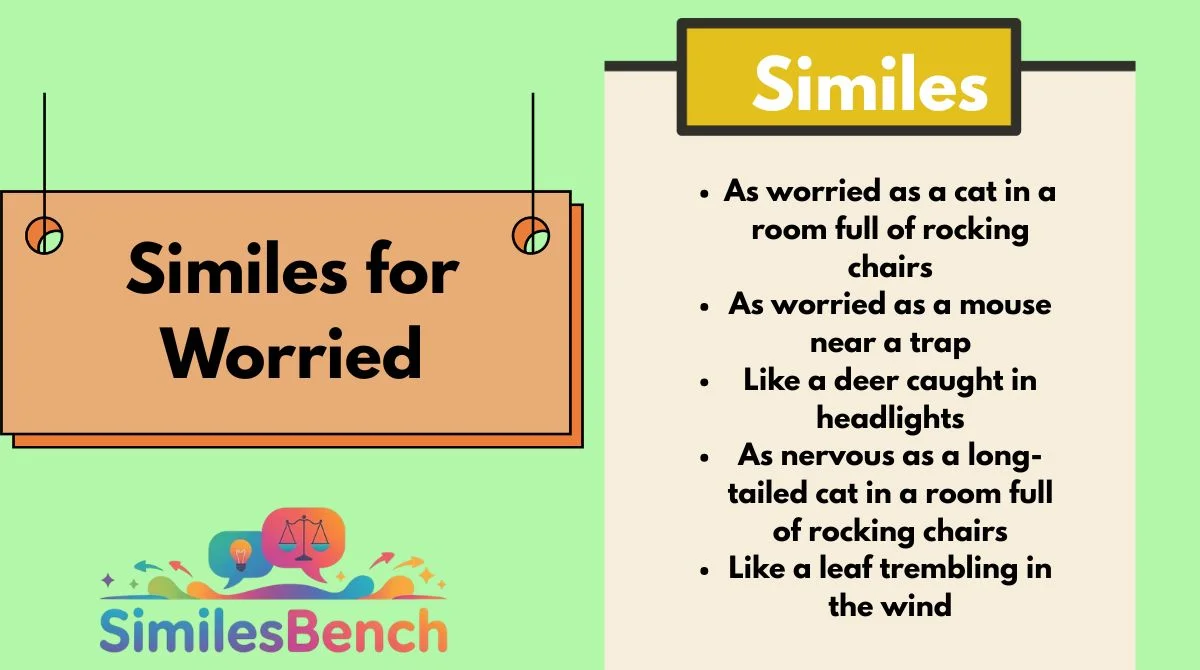
Full List of Similes for Worried
- As worried as a cat in a room full of rocking chairs
- As worried as a mouse near a trap
- Like a deer caught in headlights
- As nervous as a long-tailed cat in a room full of rocking chairs
- Like a leaf trembling in the wind
- As worried as a sailor in a storm
- Like a bird trapped in a cage
- As uneasy as a rabbit hearing footsteps
- Like a student waiting for exam results
- As anxious as a parent waiting for news
- Like a fish out of water
- As tense as a tightrope walker in strong wind
1. As worried as a cat in a room full of rocking chairs
Meaning: Extremely worried about danger.
Explanation: This simile paints a picture of a cat trying to avoid getting hurt by moving rocking chairs.
Examples:
- Emma was as worried as a cat in a room full of rocking chairs while waiting for the doctor’s call.
- Before the final interview, he looked as worried as a cat in a room full of rocking chairs.
2. As worried as a mouse near a trap
Meaning: Feeling nervous because trouble may be close.
Explanation: A mouse near a trap knows danger could strike at any moment.
Examples:
- The young employee felt as worried as a mouse near a trap during the meeting.
- She stood outside the principal’s office, as worried as a mouse near a trap.
3. Like a deer caught in headlights
Meaning: Frozen with fear or worry.
Explanation: A deer often stops moving when bright headlights shine on it.
Examples:
- When the teacher asked an unexpected question, Jake looked like a deer caught in headlights.
- She stared at the message like a deer caught in headlights.
4. As nervous as a long-tailed cat in a room full of rocking chairs
Meaning: Very anxious and uncomfortable.
Explanation: The cat worries that its long tail could be injured.
Examples:
- During his first public speech, he was as nervous as a long-tailed cat in a room full of rocking chairs.
- The athlete seemed as nervous as a long-tailed cat in a room full of rocking chairs before the race.
5. Like a leaf trembling in the wind
Meaning: Shaking with worry or fear.
Explanation: A leaf moves constantly when strong wind blows.
Examples:
- Her hands shook like a leaf trembling in the wind while she opened the letter.
- He stood like a leaf trembling in the wind before entering the courtroom.
6. As worried as a sailor in a storm
Meaning: Deeply concerned about what might happen.
Explanation: Sailors facing rough seas often fear the uncertainty ahead.
Examples:
- The business owner was as worried as a sailor in a storm when sales dropped suddenly.
- She felt as worried as a sailor in a storm while waiting for important news.
7. Like a bird trapped in a cage
Meaning: Feeling anxious and unable to relax.
Explanation: A trapped bird often appears restless and distressed.
Examples:
- He paced around the room like a bird trapped in a cage.
- During the long wait, she felt like a bird trapped in a cage.
8. As uneasy as a rabbit hearing footsteps
Meaning: Alert and worried about possible danger.
Explanation: Rabbits quickly react when they sense movement nearby.
Examples:
- The child became as uneasy as a rabbit hearing footsteps after hearing strange noises.
- He felt as uneasy as a rabbit hearing footsteps while walking alone at night.
9. Like a student waiting for exam results
Meaning: Filled with anticipation and worry.
Explanation: Waiting for results can feel stressful and uncertain.
Examples:
- She checked her phone repeatedly like a student waiting for exam results.
- He sat quietly like a student waiting for exam results.
10. As anxious as a parent waiting for news
Meaning: Extremely concerned about someone’s well-being.
Explanation: Parents often worry deeply when they are waiting for important updates.
Examples:
- He was as anxious as a parent waiting for news after the accident.
- Maria felt as anxious as a parent waiting for news while her brother was in surgery.
11. Like a fish out of water
Meaning: Uncomfortable and worried in unfamiliar situations.
Explanation: A fish cannot function properly outside water.
Examples:
- On her first day at the new school, she felt like a fish out of water.
- He looked like a fish out of water during the formal event.
12. As tense as a tightrope walker in strong wind
Meaning: Highly worried and focused.
Explanation: A tightrope walker must stay alert to avoid falling.
Examples:
- The team was as tense as a tightrope walker in strong wind before the announcement.
- She felt as tense as a tightrope walker in strong wind during the competition.
Creative Writing Tips
Similes can bring emotions to life. Therefore, learning how to use them effectively can improve almost any piece of writing.
In Stories
Use similes when characters experience strong feelings. For instance, instead of writing that a character was worried, compare their feelings to something readers can easily picture.
Example:
- Sarah felt like a leaf trembling in the wind as she waited for the door to open.
As a result, readers can better understand her emotions.
In Poems
Poetry often relies on imagery. Therefore, similes can make a poem more vivid and emotional.
Try comparing worry to animals, weather, or everyday situations. This approach helps create stronger mental pictures.
In Essays
Although essays are usually more formal, similes can still be useful. However, use them carefully and only when they support your point.
For example, a descriptive essay about a stressful experience can benefit from a well-chosen simile.
In Songs
Songwriters frequently use similes because they create memorable images. Furthermore, similes help listeners connect with emotions quickly.
Instead of simply saying someone feels worried, compare that feeling to something relatable and visual.
Practical Tips for Students and Writers
- Choose comparisons that readers can easily understand.
- Keep similes simple and natural.
- Match the simile to the emotion you want to show.
- Avoid using too many similes in one paragraph.
- Read your sentence aloud to check if it sounds smooth.
- Experiment with your own comparisons to create unique writing.
FAQs
What are similes for worried?
Similes for worried are comparisons that help describe anxiety, nervousness, or concern using “like” or “as.” They make emotions easier to imagine.
Why should I use similes in writing?
Similes make writing more colorful and engaging. As a result, readers can better understand emotions and situations.
What is the most common simile for worried?
One of the most common examples is “like a deer caught in headlights” because it clearly shows fear and uncertainty.
Can students use similes in school assignments?
Yes. Similes can improve stories, poems, descriptive essays, and many other writing assignments.
How do I create my own simile?
Think about the feeling you want to describe. Then compare it to something familiar that shares the same quality or emotion.
Conclusion
Similes for Worried are powerful tools that help writers describe emotions in a vivid and memorable way. When you want to show worry, anxiety, or nervousness, these comparisons can make your writing feel more alive.
Furthermore, they help readers connect with characters and situations on a deeper level. Practice using these similes in stories, poems, essays, and everyday writing, and your descriptions will become stronger and more engaging.