Similes for Weird Have you ever met someone so unusual that you struggled to describe them? Or perhaps you’ve read a story with a character who seemed completely different from everyone else. That’s where similes can help.
Similes make writing more colorful by comparing one thing to another using words such as “like” or “as.” They help readers picture ideas more clearly. In this article, you’ll discover creative similes for weird, learn what they mean, and see how to use them naturally in your own writing.
What Is a Simile?
A simile is a figure of speech that compares two different things using the words “like” or “as.”
For example, “as busy as a bee” compares a person’s activity level to a hardworking bee. As a result, the description becomes more vivid and memorable.
Full List of Similes for Weird
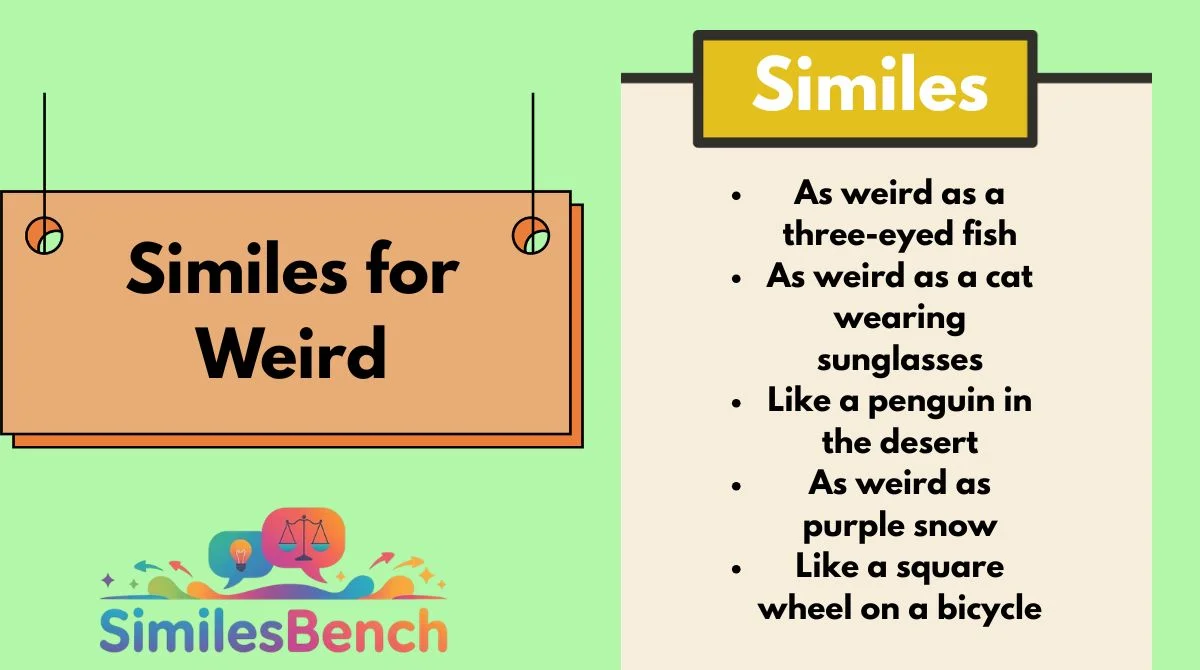
- As weird as a three-eyed fish
- As weird as a cat wearing sunglasses
- Like a penguin in the desert
- As weird as purple snow
- Like a square wheel on a bicycle
- As weird as a fish climbing a tree
- Like a clown at a funeral
- As weird as a banana in a toolbox
- Like a duck speaking French
- As weird as socks on a chicken
- Like a pineapple on a pizza at breakfast
- As weird as a moon made of cheese
- Like a robot learning ballet
1. As weird as a three-eyed fish
Meaning: Extremely unusual or strange.
Explanation: A fish with three eyes is something most people would never expect to see.
Examples:
- The drawing looked as weird as a three-eyed fish, but everyone loved it.
- His dream was as weird as a three-eyed fish swimming through the clouds.
2. As weird as a cat wearing sunglasses
Meaning: Odd in a funny and surprising way.
Explanation: Cats do not normally wear sunglasses, so the image feels amusing and unusual.
Examples:
- My cousin’s fashion style is as weird as a cat wearing sunglasses.
- The advertisement seemed as weird as a cat wearing sunglasses on a skateboard.
3. Like a penguin in the desert
Meaning: Completely out of place.
Explanation: Penguins belong in cold environments, not hot deserts.
Examples:
- I felt like a penguin in the desert during my first day at the dance class.
- His winter coat looked like a penguin in the desert on that scorching afternoon.
4. As weird as purple snow
Meaning: Strange because it is unexpected.
Explanation: Snow is usually white, so purple snow sounds impossible.
Examples:
- The movie’s ending was as weird as purple snow.
- Her explanation sounded as weird as purple snow falling in July.
5. Like a square wheel on a bicycle
Meaning: Unusual and not functioning properly.
Explanation: A bicycle cannot ride smoothly with square wheels.
Examples:
- The plan worked like a square wheel on a bicycle.
- His excuse sounded like a square wheel on a bicycle—awkward and confusing.
6. As weird as a fish climbing a tree
Meaning: Very unusual or unnatural.
Explanation: Fish are not meant to climb trees, which creates a strange image.
Examples:
- The scene looked as weird as a fish climbing a tree.
- Seeing snow on the beach felt as weird as a fish climbing a tree.
7. Like a clown at a funeral
Meaning: Out of place and uncomfortable.
Explanation: A clown does not fit the serious mood of a funeral.
Examples:
- His bright costume seemed like a clown at a funeral.
- I felt like a clown at a funeral when everyone else wore formal clothes.
8. As weird as a banana in a toolbox
Meaning: Strange because it doesn’t belong there.
Explanation: A banana and a toolbox have nothing in common.
Examples:
- The random question was as weird as a banana in a toolbox.
- Her comment appeared as weird as a banana in a toolbox during the meeting.
9. Like a duck speaking French
Meaning: Funny, strange, and unexpected.
Explanation: Ducks cannot speak human languages, making the image silly.
Examples:
- The cartoon character sounded like a duck speaking French.
- His impression was like a duck speaking French, yet everyone laughed.
10. As weird as socks on a chicken
Meaning: Ridiculously unusual.
Explanation: Chickens do not wear socks, so the comparison feels playful.
Examples:
- The outfit looked as weird as socks on a chicken.
- That invention seemed as weird as socks on a chicken, but it actually worked.
11. Like a pineapple on a pizza at breakfast
Meaning: Unexpected and different from normal expectations.
Explanation: This combination surprises many people.
Examples:
- The idea landed like a pineapple on a pizza at breakfast.
- Her suggestion sounded like a pineapple on a pizza at breakfast—unexpected but interesting.
12. As weird as a moon made of cheese
Meaning: Extremely strange and imaginary.
Explanation: A moon made of cheese belongs in fantasy rather than reality.
Examples:
- The story became as weird as a moon made of cheese.
- His imagination was as weird as a moon made of cheese floating above town.
13. Like a robot learning ballet
Meaning: Strange, awkward, and unusual.
Explanation: Robots are often associated with machines, not graceful dancing.
Examples:
- My first dance lesson felt like a robot learning ballet.
- He moved like a robot learning ballet when he stepped onto the stage.
Creative Writing Tips
Similes can make ordinary writing feel alive. However, using them well takes a little practice.
Using Similes in Stories
Stories become more interesting when readers can picture what is happening.
For instance, instead of saying a character was strange, you might write, “He looked as weird as a three-eyed fish.” As a result, readers instantly form a clear image.
Using Similes in Poems
Poetry often relies on imagination and emotion.
Therefore, unusual similes can help create strong feelings and memorable pictures. Choose comparisons that surprise the reader while still making sense.
Using Similes in Essays
Essays can sometimes feel plain. However, a carefully chosen simile can make an example easier to understand.
Use them sparingly so your writing remains clear and professional.
Using Similes in Songs
Songwriters often use similes because they create vivid images.
For example, a lyric comparing a feeling to something strange can make the message more powerful. Consequently, listeners remember the song more easily.
Practical Tips for Better Similes
- Compare things readers can easily imagine.
- Keep the comparison simple and clear.
- Avoid overusing similes in every sentence.
- Try creating your own unique comparisons.
- Read your sentence aloud to see if it sounds natural.
FAQs
What is a simile?
A simile is a comparison between two different things using the words “like” or “as.”
Why do writers use similes?
Writers use similes to create clearer pictures and make their writing more engaging.
Can similes be funny?
Yes. In fact, many similes are humorous because they compare unexpected things.
What is an example of a weird simile?
“As weird as a three-eyed fish” is a common example of a strange and creative simile.
How can students learn similes easily?
Students can learn similes by reading stories, noticing comparisons, and practicing their own examples regularly.
Conclusion
Similes for Weird are a simple but powerful way to make writing more colorful. They help readers imagine ideas, characters, and emotions more clearly. Moreover, creative similes for weird can add humor, personality, and originality to your work.
Whether you’re writing stories, poems, essays, or songs, these comparisons can make your words more memorable. So start experimenting with similes and let your imagination shine.