Modern texting is filled with shorthand and abbreviations, but few terms are as widely searched or misunderstood as the TMI meaning slang. If you have ever received a text or scrolled through social media comments and spotted this three-letter acronym, you might wonder exactly why people use it.
People frequently search for the TMI meaning slang because digital communication moves fast, and missing the context of popular internet terms can lead to awkward interactions.
This phrase is a vital part of modern online culture, helping users set boundaries and react to conversations in real-time. Whether it appears on TikTok, a WhatsApp chat, or a dating application, understanding this expression is essential for navigating daily digital conversations.
The True Definition and Meaning of TMI
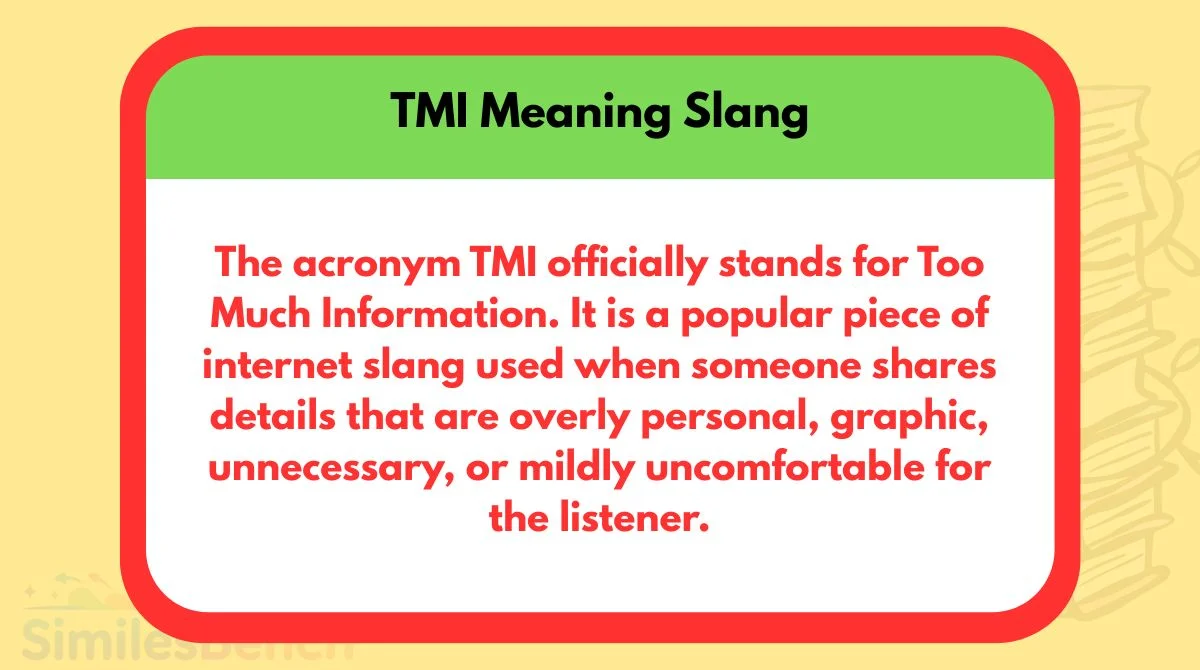
The acronym TMI officially stands for Too Much Information. It is a popular piece of internet slang used when someone shares details that are overly personal, graphic, unnecessary, or mildly uncomfortable for the listener.
The TMI meaning slang can change drastically based on the tone and context of the conversation. It generally functions in three different ways:
- Playful Teasing: Used among close friends to laugh off an awkward confession.
- A Social Boundary: A polite but direct way to tell someone they are oversharing.
- Genuine Discomfort: Used to halt a conversation when details become too graphic or inappropriate.
The Background and History of the Term
While it feels like a product of the smartphone era, the phrase “Too Much Information” actually originated in mainstream spoken English during the late 1980s and early 1990s.
With the rise of internet chatrooms, MSN Messenger, and early texting in the 2000s, the phrase was naturally shortened to the TMI meaning slang we know today. Platforms like Twitter, Reddit, and TikTok later globalized the term, turning it into a universal reaction for oversharing across different generations.
How TMI Is Used in Various Contexts
The TMI meaning slang is incredibly versatile and adapts to different digital environments:
Casual Texting and Group Chats
In regular text messages, friends use it to react to funny yet embarrassing habits. For example, if someone texts, “I haven’t washed my favorite hoodie in three months,” a friend might reply, “TMI! 🤢”
Social Media Platforms
On Instagram or TikTok, users comment TMI under videos where creators share deeply intimate medical stories, relationship dramas, or private thoughts that feel a bit too exposing for the public eye.
Common Misconceptions and Clarifications
A major misconception about the TMI meaning slang is that it is always an insult or an aggressive shutdown.
In reality, it is rarely used to hurt someone’s feelings. Most of the time, it acts as a lighthearted, humorous traffic light for conversation. Punctuation and emojis completely change its weight—”TMI 😂” is just friendly banter, whereas a flat “TMI.” indicates a serious request to change the subject.
Similar Terms and Alternatives
If you want to express the same feeling without using the exact TMI meaning slang, several alternatives exist in modern English:
- Oversharing: The formal act of giving too many personal details.
- Cringe: Used when someone’s shared information makes others uncomfortable.
- Trauma Dumping: A heavier slang term used when someone shares deep psychological struggles unexpectedly.
How to Respond to This Term Naturally
If someone hits you with a TMI response, there is absolutely no need to panic or overthink. The best way to handle it is to keep your reply short and casual:
- “Oops, my bad! 😅”
- “Haha, noted!”
- “Okay, changing the subject now!”
Regional and Cultural Differences
In Western digital culture, the TMI meaning slang is incredibly common and used freely. However, in more conservative cultures where sharing personal life details is already discouraged, using the term can sometimes feel a bit harsher or more dismissive than intended.
TMI vs. Similar Internet Slang
| Term | Core Meaning | Best Used For |
| TMI | Sharing excessive or inappropriate details. | Texting and casual chats. |
| Cringe | Socially awkward or embarrassing behavior. | Reacting to weird videos or actions. |
| Overshare | Putting too much data out in public. | Describing someone’s posting habits. |
Usage in Online Communities and Dating Apps
On dating apps like Tinder or Bumble, the TMI meaning slang frequently appears when a match moves too fast. Sharing past relationship trauma or financial issues on the first night of texting often triggers a “TMI” response, signaling that social boundaries have been crossed too soon.
Hidden or Offensive Meanings
There are no hidden, malicious, or deeply offensive meanings behind the TMI meaning slang. It is a transparent acronym. However, if it is used maliciously to silence someone who is opening up about genuine mental health issues, it can come across as highly insensitive.
Is TMI Suitable for Professional Communication?
Absolutely not. You should completely avoid using the TMI meaning slang in workplace emails, Slack channels, or corporate meetings. It sounds highly unprofessional and dismissive. Instead of saying “TMI” to a colleague, use professional phrases like, “Let’s focus on the project details,” or “That might be outside the scope of our discussion.”
What does TMI stand for?
It stands for Too Much Information.
Is TMI rude to use?
Not usually; it depends heavily on your emojis and tone.
Is TMI positive or negative?
It is generally neutral, acting as a casual boundary marker.
Do people still use TMI in 2026?
Yes, it remains a staple acronym in daily texting culture.
Can I say TMI to my boss?
No, it is too informal and unprofessional for workplace environments.
What is a quick reply to TMI?
A simple “Oops, sorry about that! 😅” works perfectly.
Conclusion
Mastering the TMI meaning slang helps you better navigate modern digital conversations and understand text boundaries. Whether used as a joke between best friends or a gentle boundary on a dating app, it is a quick, effective way to keep conversations comfortable for everyone involved.